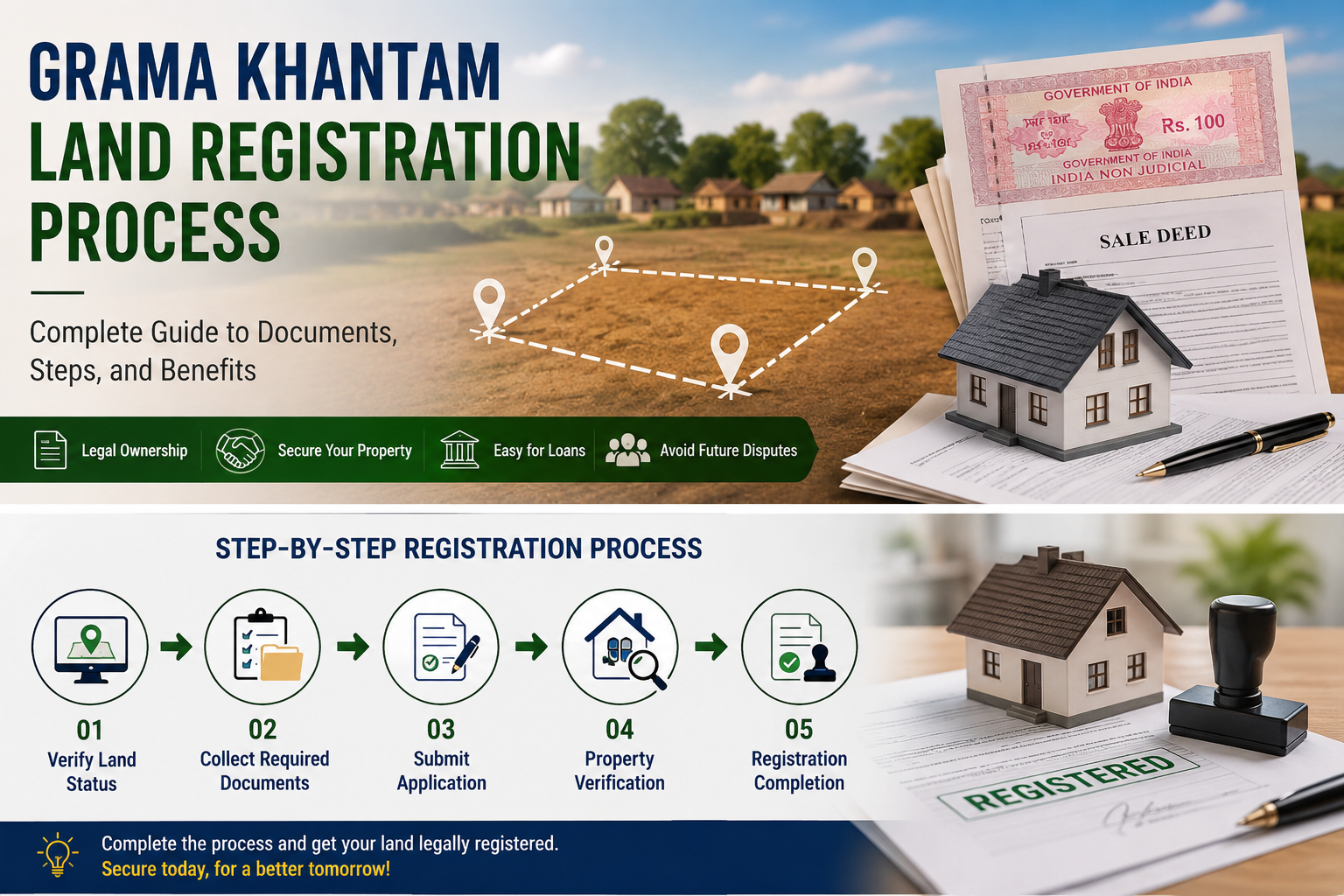

Many property owners in Andhra Pradesh have houses or house sites located in Grama Khantam lands. However, when attempting to sell, register, or transfer such properties, many people face confusion regarding ownership records, registration eligibility, required documents, and verification procedures.
Understanding the Grama Khantam Land Registration Process is important for property owners, buyers, legal heirs, and beneficiaries. This guide explains Grama Khantam land, eligibility for registration, required documents, ownership verification, registration procedures, and common issues faced during registration.
Grama Khantam Land Registration Process 2025 Overview
| Particulars | Details |
|---|---|
| Process Name | Grama Khantam Land Registration |
| State | Andhra Pradesh |
| Land Type | Village Residential Land |
| Registration | Subject to Verification |
| Verification Authority | Revenue & Registration Departments |
| Status Check | Online & Offline |
| Documents Required | Ownership & Revenue Records |
| Purpose | Property Registration & Ownership Verification |
What Is Grama Khantam Land?
Grama Khantam refers to village habitation land traditionally used for residential purposes within village limits. These lands are generally occupied by villagers for house construction and residential use.
In many villages, houses have existed on Grama Khantam lands for decades without formal title documents. Because of this, ownership verification becomes important before registration, transfer, or legal transactions.
Who Can Apply for Registration?
Applicants seeking registration of Grama Khantam property may be required to establish possession or ownership through Panchayat records, house tax assessments, electricity service records, succession documents, revenue records, or other supporting evidence accepted by the concerned authorities.
➤ Read Also: Talliki Vandanam Scheme 2026: Eligibility, Benefits & Latest Updates
Documents Required for Grama Khantam Registration
- House Tax Assessment Register Extract
- Panchayat Ownership Certificate (if available)
- Electricity Service Connection Proof
- Possession Certificate issued by Revenue Authorities
- Registered Sale Deed (if available)
- Mutation Records
- Adangal / 1-B Extract (where applicable)
How to Check Grama Khantam Land Status?
Before registration, property owners should verify:
Revenue Verification
Check land classification and village records.
Survey Verification
Verify survey number and property boundaries.
Registration Department Verification
Check whether registration restrictions exist.
Encumbrance Verification
Confirm that the property has no registered disputes or encumbrances.
Can Grama Khantam Property Be Transferred to Legal Heirs?
In the event of the original occupant’s death, legal heirs may seek transfer of ownership based on succession documents, possession records, Panchayat records, and revenue verification. The final decision depends on verification by the concerned authorities and applicable government regulations.
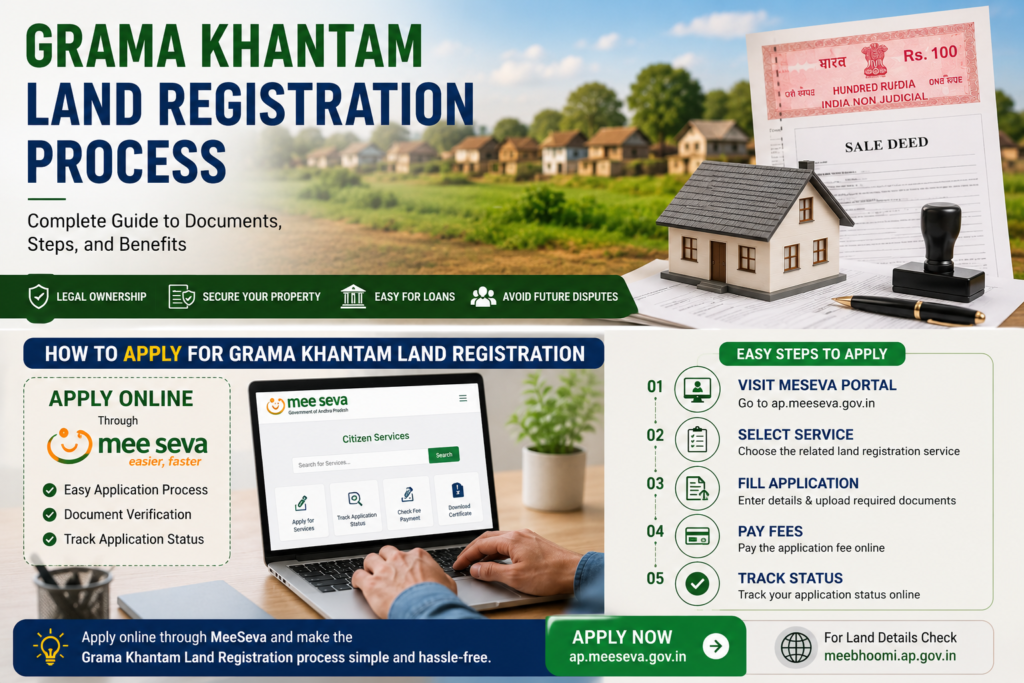
How to Apply for Grama Khantam Land Registration?
- Obtain ownership and possession proof.
- Verify survey number through MeeBhoomi.
- Obtain Encumbrance Certificate from Registration Department.
- Submit application before Tahsildar or Sub-Registrar.
- Revenue Inspector conducts field verification.
- Tahsildar submits verification report.
- Registration proceeds after approval and document verification.
Common Reasons for Registration Rejection
- Property boundary dispute.
- Multiple ownership claims.
- Survey number mismatch.
- Encroachment complaints.
- Court litigation pending.
- Insufficient ownership proof.
- Revenue records not matching possession records.
Common Problems Faced by Property Owners
- Missing ownership records
- Survey number discrepancies
- Boundary disputes
- Inheritance disputes
- Missing tax records
- Encroachment complaints
- Revenue record mismatches
Resolving these issues early may help avoid registration delays.
How Revenue Authorities Verify Grama Khantam Land?
- Survey number verification
- Village map verification
- House tax record verification
- Possession verification
- Local enquiry by Revenue Inspector
- Tahsildar report preparation
Before Purchasing Grama Khantam Property
Buyers should verify:
- Ownership records
- House tax records
- Survey details
- Encumbrance Certificate
- Possession status
- Court case status
- Registration eligibility
Proper verification can reduce future legal risks.
Can Grama Khantam Land Get House Loan?
Banks and financial institutions may require ownership proof, revenue records, possession documents, and registration documents before approving a housing loan on Grama Khantam property. Loan eligibility depends on the policies of the lending institution and verification of property records.
Difference Between Grama Khantam and Patta Land
| Feature | Grama Khantam Land | Patta Land |
| Purpose | Residential Use | Agricultural/Private Ownership |
| Ownership Proof | May Require Verification | Usually Available |
| Registration | Subject to Verification | Generally Allowed |
| Revenue Records | May Vary | Available |
| Legal Documentation | Often Limited | Usually Complete |
Common Reasons for Registration Delay
- Survey mismatch
- Ownership disputes
- Missing house tax records
- Boundary disputes
- Inheritance claims
- Revenue record mismatch
Official Resources
| Action | Link |
|---|---|
| Andhra Pradesh Government Portal | Visit Website |
| Registration Department Services | Open Portal |
| MeeBhoomi Land Records | Check Land Records |
| AP MeeSeva Services | Access Services |
Frequently Asked Questions (FAQs)
1. What is Grama Khantam land?
Grama Khantam refers to village habitation land generally used for residential purposes within village limits.
2. Can Grama Khantam land be registered?
Grama Khantam land registration is generally processed after verification of possession records, Panchayat records, survey details, and revenue department records by the concerned authorities.
3. What documents are required?
Aadhaar Card, House Tax Receipt, Possession Records, Survey Details, EC, and other supporting documents may be required.
4. How can I verify ownership?
Ownership can be verified through revenue records, tax records, local authority records, and supporting documents.
5. How long does verification take?
Verification timelines depend on survey verification, field inspection requirements, ownership records, and workload at the concerned Revenue and Registration offices.
6. Can Grama Khantam land get a patta?
In eligible cases, patta issuance may be considered according to Andhra Pradesh Government policies, revenue verification, possession records, and applicable regulations. Final approval depends on the concerned authorities.
7.Can Grama Khantam land be inherited?
Yes, legal heirs may claim ownership subject to succession records, possession proof, revenue verification, and applicable government rules.
8. Can Grama Khantam land be sold without registration?
Property transactions involving Grama Khantam land should comply with applicable registration and revenue regulations. Buyers should verify ownership, possession, survey records, and registration eligibility before entering into any transaction.
Key Takeaways
- Grama Khantam land is generally village residential land.
- Registration depends on ownership verification.
- Survey records and possession documents are important.
- Buyers should verify all records before purchase.
- Revenue and registration records should match.
- Official government records should always be considered final.
Conclusion
The Grama Khantam Land Registration Process is important for property owners seeking legal recognition, transfer, or registration of residential properties located within village habitation areas. Proper verification of ownership records, possession documents, survey details, and revenue records can help avoid disputes and registration delays. Applicants should always rely on official government records and follow the prescribed verification procedures before proceeding with any property transaction.

Venkatesh is the Content Lead and Researcher at UNQ Information. He researches government schemes, pension programs, citizen services, and welfare initiatives related to Andhra Pradesh and Telangana. He regularly publishes updates and educational content to help readers understand eligibility criteria, required documents, application procedures, benefit details, and important government announcements in a simple and easy-to-understand format.