
Accessible and affordable transportation plays an important role in education, employment, healthcare access, and social participation. For many persons with disabilities, regular travel expenses can become a significant financial burden, especially when frequent visits to hospitals, rehabilitation centers, educational institutions, or workplaces are required.
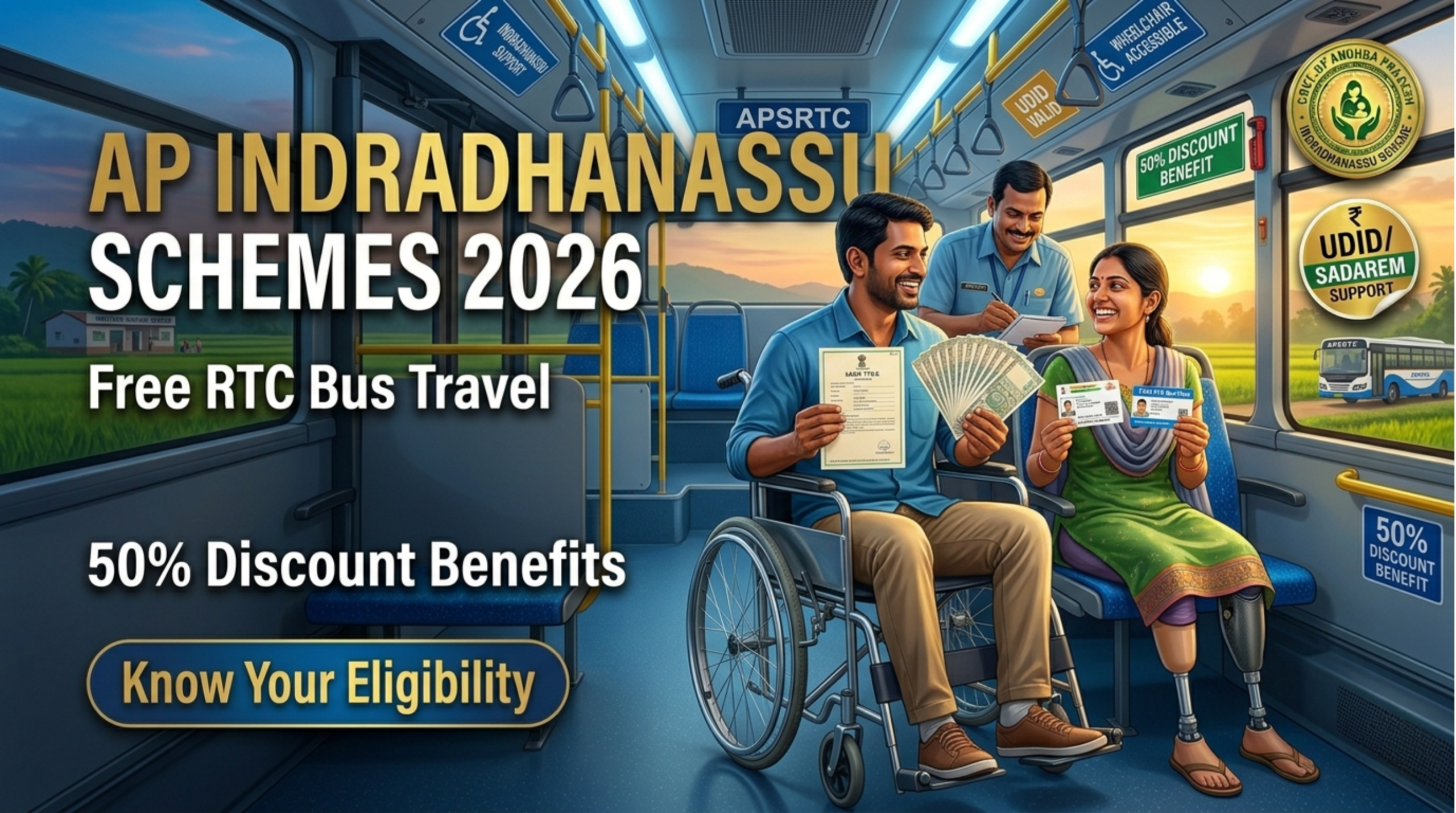
To improve mobility and promote social inclusion, the Andhra Pradesh Government introduced the AP Indradhanassu Scheme 2026. Under this initiative, eligible persons with disabilities can travel free of cost in selected APSRTC bus services across the state. The scheme is intended to reduce transportation barriers and help beneficiaries travel with greater independence and dignity. Recent government announcements indicate that eligible persons with 40% or more disability can avail free travel benefits in specified APSRTC services.
Many eligible beneficiaries are still confused about disability percentage requirements, bus categories covered under the scheme, pass application procedures, and renewal requirements. Understanding these details can help applicants avoid verification issues and make full use of the free travel facility.
Quick Scheme Overview
| Particulars | Details |
|---|---|
| Scheme Name | AP Indradhanassu Scheme |
| State | Andhra Pradesh |
| Benefit | Free APSRTC Bus Travel |
| Beneficiaries | Eligible Persons with Disabilities |
| Minimum Disability Requirement | 40% or More |
| Travel Mode | APSRTC Eligible Bus Services |
| Verification | Disability Certificate, SADAREM Records, Aadhaar |
| Pass Type | Digital / Smart Disability Bus Pass |
| Escort Benefit | Eligible Escorts May Receive Fare Concessions |
What Is AP Indradhanassu Scheme?
The AP Indradhanassu Scheme is a welfare initiative designed to provide free travel facilities to eligible persons with disabilities in Andhra Pradesh. The objective is to improve accessibility, mobility, and social participation by reducing transportation costs. Eligible beneficiaries can travel without paying fares in selected APSRTC services after successful verification.
The scheme is intended to support students, employees, job seekers, patients requiring medical treatment, and other persons with disabilities who depend on public transportation for daily travel.
➤ Related Guide: Adabidda Nidhi Scheme 2025: Eligibility, Benefits, Documents & Latest Updates
Key Benefits of the Scheme
For many beneficiaries, transportation costs can become a recurring monthly expense. Students may need to travel to educational institutions, patients may require regular hospital visits, and job seekers often depend on public transport while attending interviews or employment opportunities. Free travel support can significantly reduce these expenses.
Eligibility Criteria
To receive benefits under the scheme, applicants generally need to satisfy the following conditions:
Disability Requirement
Applicants should have at least 40% disability as recognized under applicable disability guidelines and government records.
Valid Disability Records
The disability details should be available through valid certification systems such as SADAREM and related government verification mechanisms.
Andhra Pradesh Beneficiary Records
Applicants may be required to satisfy residency and beneficiary verification requirements prescribed by the government.
APSRTC Bus Services Covered
Eligible beneficiaries can travel free of cost in the following APSRTC services:
- City Ordinary
- Metro Express
- Palle Velugu
- Ultra Palle Velugu
- Express Services
Government announcements indicate that these five categories are covered under the free travel facility.
Services Not Fully Covered
Certain premium services may continue under concessional travel rules rather than full fare exemption. Government guidelines indicate that some categories such as Ultra Deluxe and specific premium services may continue under existing concession structures.
Documents Required
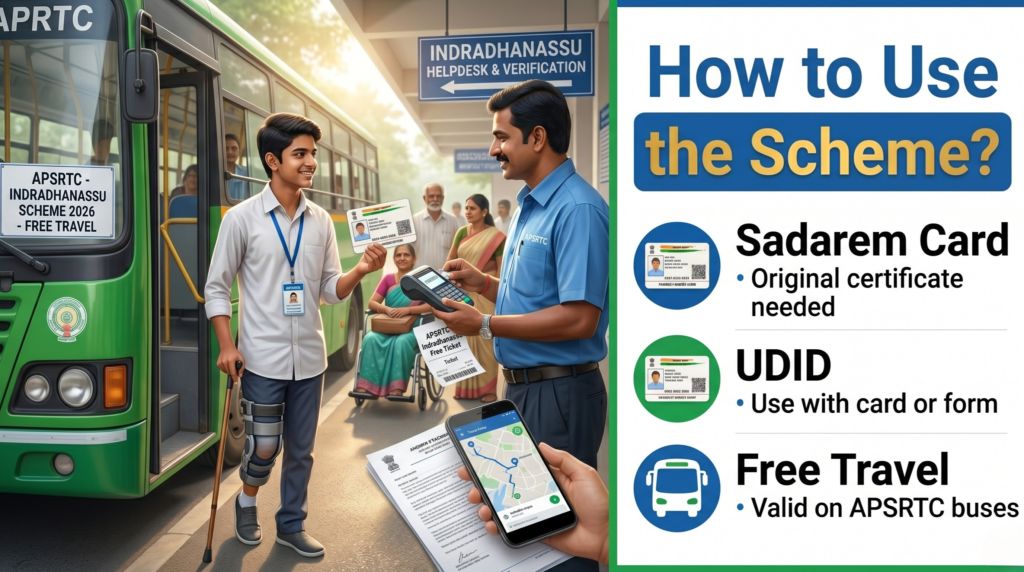
Applicants should generally keep the following documents ready:
- Aadhaar Card
- SADAREM Certificate
- Disability Certificate
- Passport Size Photograph
- Mobile Number
- Address Proof
- Existing Bus Pass (if applicable)
Maintaining updated records helps reduce verification delays.
➤ Read More: Digital Lakshmi Scheme 2026: Digital Entrepreneurship Support for Women
How to Apply for a Disability Bus Pass
Eligible applicants can apply through APSRTC-supported channels.
Option 1: APSRTC Mobile Application
Applicants can apply using the official APSRTC mobile application.
Option 2: WhatsApp Governance Service
Applications can also be initiated through the Mana Mithra WhatsApp service.
Option 3: APSRTC Support Centers
Applicants may also receive assistance through designated APSRTC facilities and support channels.
How Verification Works
Beneficiary verification is one of the most important stages of the process.
Step 1: Disability Verification
Authorities verify disability percentage and eligibility records.
Step 2: SADAREM Validation
Disability information is matched against official databases.
Step 3: Identity Verification
Aadhaar and beneficiary details are verified.
Step 4: Pass Generation
After successful validation, a digital disability pass is generated.
Step 5: Travel Authorization
Eligible beneficiaries can travel according to approved bus categories.
APSRTC indicates that digital passes contain disability information, eligibility details, photographs, QR verification, and SADAREM identification information.
What Information Is Available on the Digital Pass?
The digital disability pass generally contains:
- Beneficiary Name
- Photograph
- SADAREM ID
- Disability Type
- Disability Percentage
- Eligible Bus Categories
- QR Code Verification
This allows conductors and officials to verify eligibility quickly.
Common Reasons Why Applications Are Rejected
Some applicants may experience delays or rejection because of:
- Disability percentage below eligibility requirements
- Invalid or outdated disability records
- Aadhaar mismatches
- Missing SADAREM information
- Incorrect personal details
- Duplicate records
- Incomplete documentation
Applicants should carefully review all details before submission.
➤ Check Also: Nirudhyoga Bruthi Scheme 2026: Eligibility, Benefits, Documents & Latest Updates
What To Do If Your Pass Is Not Approved?
If approval is delayed:
- Verify disability certificate details
- Check SADAREM records
- Ensure Aadhaar information is correct
- Review uploaded documents
- Contact APSRTC support channels
- Reapply if verification errors are identified
Many issues are resolved after correcting record mismatches.
Common Mistakes During Bus Pass Verification
Many applications face delays because of avoidable errors.
Common issues include:
• Incorrect Aadhaar details
• Outdated SADAREM records
• Disability percentage mismatch
• Blurred document uploads
• Mobile number not linked correctly
• Personal details differing across records
Applicants should carefully verify all information before submitting their application.
Renewal Process
Beneficiaries should periodically verify the validity of their pass and supporting records.
Renewal may require:
- Updated disability records
- Aadhaar verification
- Record validation
- Reconfirmation of eligibility
Applicants should follow the latest APSRTC instructions whenever renewal notifications are issued.
Beneficiary Checklist
Before applying, verify:
✓ Disability percentage meets eligibility requirements
✓ SADAREM details are updated
✓ Aadhaar information is correct
✓ Mobile number is active
✓ Required documents are available
✓ Photographs are clear and recent
✓ Personal information matches official records
What Happens After Pass Approval?
After successful verification, eligible beneficiaries receive access to a digital disability travel pass. Conductors and APSRTC officials can verify eligibility through the QR code and beneficiary details available on the pass.
Beneficiaries should keep their pass details accessible while travelling and ensure supporting records remain updated whenever required.
Impact of the Scheme
For many persons with disabilities, transportation is not only a travel issue but also an accessibility issue. The availability of free APSRTC travel can improve access to education, healthcare, employment opportunities, government services, and social activities. By reducing transportation costs, the scheme helps beneficiaries participate more actively in daily life.
The initiative also supports broader goals of inclusion and equal access to public services by making public transportation more accessible for eligible persons with disabilities.
➤ Read Also: NTR Baby Kit Scheme 2025: Free Baby Care Kit Benefits, Eligibility & Distribution Details
Important Official Resources
| Action | Link |
|---|---|
| APSRTC Bus Pass Portal | Apply / Check Status |
| APSRTC Official Website | Visit Website |
| Andhra Pradesh Government | Visit Portal |
| Aadhaar Services | Open UIDAI |
| DBT Benefit Information | Check Details |
Frequently Asked Questions
1.Who can receive free travel under the AP Indradhanassu Scheme?
Eligible persons with disabilities having 40% or more disability can receive benefits subject to verification requirements.
2.Is a disability certificate required?
Yes. Disability verification is an important part of eligibility assessment.
3.Can escorts receive benefits?
Government announcements indicate that eligible escorts may receive fare concessions in applicable situations.
4.Is a digital pass available?
Yes. APSRTC provides digital disability pass facilities with QR-based verification.
5.Which buses are covered?
City Ordinary, Metro Express, Palle Velugu, Ultra Palle Velugu, and Express services are covered under the scheme.
Conclusion
The AP Indradhanassu Scheme represents an important step toward improving mobility and accessibility for persons with disabilities across Andhra Pradesh. While the free travel benefit is the most visible feature of the scheme, successful participation depends on proper disability verification, updated SADAREM records, Aadhaar validation, and accurate beneficiary information. Applicants who maintain updated records and complete all verification requirements are more likely to receive benefits without delays.

Venkatesh is the Content Lead and Researcher at UNQ Information. He researches government schemes, pension programs, citizen services, and welfare initiatives related to Andhra Pradesh and Telangana. He regularly publishes updates and educational content to help readers understand eligibility criteria, required documents, application procedures, benefit details, and important government announcements in a simple and easy-to-understand format.