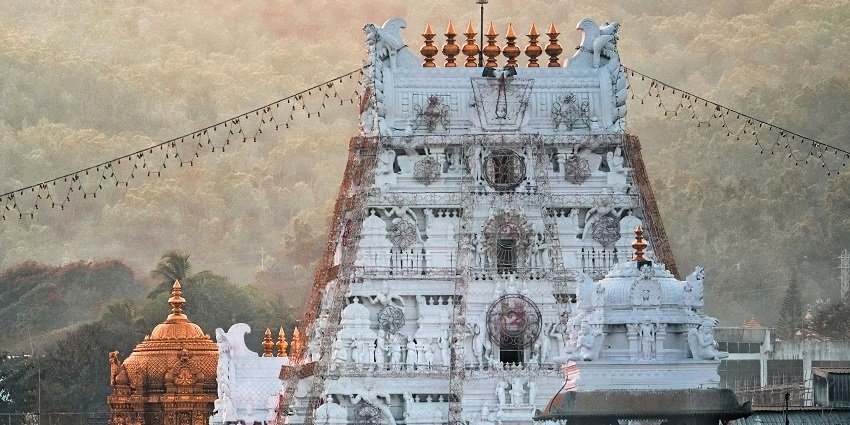

Andhra Pradesh has everything tourism needs — a 974-kilometre coastline, Tirupati, Srisailam, Araku Valley, Amaravati and Gandikota — but for years the sector stayed far below its potential. The Tourism Policy 2024-29, issued through G.O.Ms.No.17 on 10 December 2024, changed that: tourism got industry status, a ₹25,000 crore private investment target was set, and the state decided to build tourism around seven anchor hubs and ten thematic circuits.
The most important part for ordinary people is the homestay scheme. Under an addendum issued on 8 October 2025 (G.O.Ms.No.32), the government wants 10,000 homestays across the state, with real incentives for homeowners who register — including a 100% refund of net SGST for seven years. This post explains what the policy offers, what is already moving, and what you can apply for now. These AP tourism schemes cover homestays, temple tourism, hotels and the incentives behind them.
At a glance
| Item | Detail |
|---|---|
| Policy | AP Tourism Policy 2024-29, G.O.Ms.No.17, dated 10.12.2024 |
| Investment target | ₹25,000 crore private investment through PPP |
| Anchor hubs (7) | Visakhapatnam, Araku Valley, Rajahmundry, Amaravati, Srisailam, Gandikota, Tirupati |
| Circuits | 10 thematic circuits, 25 projects — 10 temple, 3 eco, 2 cruise, 5 beach circuits |
| Homestay target | 10,000 homestays/B&Bs in 5 years; 50,000 jobs; 20,000 families upskilled |
| Homestay incentive | 100% Net SGST refund, 7 years; utilities at domestic rates; registration fee waived 3 years |
| Rooms target | 19,500 rooms now → 50,000 rooms by 2029 |
| Central grant | ₹428 crore — the highest-ever Government of India tourism grant to AP since bifurcation |
| Where to register | APTA portal — aptourism.gov.in |
AP tourism schemes: the policy in brief
The Tourism Policy 2024-29 replaced the 2020-25 policy and runs for five years. Its core idea: the government builds the framework and private investors build the hotels, resorts and experiences. Tourism was granted industry status, which unlocks the tax and duty benefits below.
The state plans seven anchor hubs — Visakhapatnam, Araku Valley, Rajahmundry, Amaravati, Srisailam, Gandikota and Tirupati — with 10 thematic circuits and 25 priority projects around them: temple routes, beach circuits in Visakhapatnam, Kakinada, Srikakulam, Nellore and Machilipatnam, Buddhist circuits at Amaravati–Nagarjunakonda and Visakhapatnam–Thotlakonda, plus eco, cruise, wellness and agri-tourism.
The targets: tourism’s share of Gross Value Added rises from 4.6% to 8%, employment share from 12% to 15%, five lakh jobs, average stay from one or two days to five days, and hotel rooms from about 19,500 to 50,000 by 2029, with classified rooms rising from 3,500 to 10,000.
Approvals run through a Single Desk portal with fixed timelines and no physical visits, and an Investment Facilitation Cell chaired by the District Collector is the one-stop window for clearances. A Tourism Land Allotment Policy 2025 — described by the government as the first of its kind in India — plus caravan tourism guidelines and the homestay framework are meant to make land and permissions predictable.
Homestays: turn spare rooms into income
This is the part that reaches ordinary families. The homestay framework, added by G.O.Ms.No.32 on 8 October 2025, aims to promote 10,000 homestays and bed-and-breakfast units in five years, create 50,000 jobs and upskill 20,000 families — focusing on eco-sensitive and rural areas, where tourists want an authentic local stay.
A homestay has 1 to 6 rooms (2 to 12 beds), and the owner must live in the same house — the scheme is for genuine home stays, not for converting a house into a commercial lodge while the owner lives elsewhere.
Registered homestays get three concrete benefits. First, a refund of 100% of net SGST for seven years, wherever applicable. Second, electricity, water, sewage and property tax at domestic rates instead of commercial rates — a real saving every month. Third, the registration fee is waived for the first three years. On registration, APTA awards a Certificate of Recognition from the State Department of Tourism, and outstanding homestays can receive Awards of Appreciation for service, sustainability and cultural preservation.
Money to set up a homestay can come from low-interest loans: the government order notes that Pradhan Mantri MUDRA Yojana loans and other central schemes for micro and small entrepreneurs can be extended to homestays. Our MUDRA loans in AP guide explains how to apply.
Registration is online through the APTA portal at aptourism.gov.in. Police verification and approval by a District Committee are part of the process. The scheme is a live government framework — the GO has been issued and the portal is the registration route — but remember that registration, verification and approval take time, so apply well before you expect guests.
Temple tourism: where the money is going
Temple tourism is the biggest single draw in Andhra Pradesh, and it is where the largest central funds are flowing — mainly through two Government of India schemes, PRASHAD (Pilgrimage Rejuvenation and Spiritual, Heritage Augmentation Drive) and Swadesh Darshan 2.0, plus Special Assistance to States for Capital Investment (SASCI). The figures below are from the Government of India’s answer in the Rajya Sabha on 30 July 2026 (Question No. 1418).
Under PRASHAD, Amaravati town (₹27.77 crore) and Srisailam temple (₹43.08 crore) are complete. Work at Sri Varaha Lakshmi Narasimha Swamy temple, Simhachalam (₹54.04 crore) is 95.58% complete, and pilgrimage infrastructure at Annavaram temple town (₹25.33 crore, sanctioned December 2024) is at 33.11% progress.
Under Swadesh Darshan 2.0, the Borra Cave Experience at Araku–Lambasingi (₹29.88 crore, March 2024) and the Suryalanka Beach Experience at Bapatla (₹97.52 crore, March 2025) are ongoing. Under Challenge Based Destination Development, Nagarjuna Sagar’s Buddhist heritage (₹25 crore) and the Ahobilam spiritual odyssey (₹24.99 crore), both sanctioned in March 2025, are under way. Under SASCI, Gandikota fort and gorge (₹77.91 crore) and the Akhanda Godavari project at Rajahmundry (₹94.44 crore) are ongoing. Total central assistance listed for Andhra Pradesh is ₹707.91 crore.
Tirupati is getting the largest single push. In October 2026 the Chief Minister launched a ₹1,332 crore makeover to turn it into a world-class spiritual hub, centred on a one-stop pilgrim facility on the Alipiri–SV Zoo Park Road for about 15,000 pilgrims a day, with accommodation, annaprasadam, transport and healthcare in one place. A ₹311 crore parking facility for 4,500 vehicles and a 30-bay transport terminal are planned, plus about 20 km of master-plan roads — ₹127 crore by TUDA for 16.5 km and ₹115 crore by TTD for 3.6 km.
Not everything is sanctioned yet. In April 2026 the state submitted proposals to the Centre for nine new projects, including a ₹120.04 crore beach-front development at Machilipatnam, ₹95.18 crore for Sri Lakshmi Narasimha Swamy temple at Mangalagiri, and ₹213.72 crore for Sri Surya Narayana Swamy temple at Arasavalli. These are proposals under consideration — not approved projects.
What investors and hotel owners get
Beyond homestays, the policy’s incentives for tourism projects are: 100% stamp duty exemption, electricity duty reimbursement for five years, SGST reimbursement for up to 15 years (7 to 15 years by project type), capital subsidy up to 25% for MSME projects and 10% for large projects, and 100% reimbursement of land conversion charges.
The response so far, as reported in the Budget Speech for 2026-27, is ₹20,088 crore attracted through 117 MoUs, expected to generate 1,22,637 jobs. Of this, ₹6,681 crore of projects are under implementation, adding 5,232 hotel keys and 27,856 jobs. APTDC signed MoUs worth ₹10,329 crore at the Tourism Conclave in June 2026, and the State Investment Promotion Board has approved projects worth ₹3,482 crore adding 2,698 hotel rooms.
The Godavari Pushkaralu in 2027 is the next big test: the government expects 8 to 10 crore visitors, with 440 bathing ghats being prepared.
How to apply and what to do now
If you want to start a homestay: register your property on the APTA portal at aptourism.gov.in. Keep your Aadhaar, property documents and photographs of the rooms ready. Expect police verification and District Committee approval after you apply. Once registered, you get the Certificate of Recognition and the SGST refund and domestic-rate benefits above. If you need funds to furnish rooms, apply for a MUDRA loan — see our MUDRA loan guide — and for document help, the Grama/Ward Sachivalayam services guide explains the local route.
If you are an investor or hotel owner: use the Single Desk portal for clearances and approach the District Collector-chaired Investment Facilitation Cell for land and approvals. Check the incentive slabs in the policy document before committing money — SGST reimbursement varies from 7 to 15 years by project type.
If you are a tourist: there is nothing to apply for. Simhachalam, Annavaram, Borra Caves, Suryalanka, Gandikota and the Tirupati pilgrim facility are works in progress, with the completion percentages given above. Plan trips around what is already open, and check the APTA portal for the current status before travelling.
One warning: no one should ask you for money to register a homestay or to get a tourism incentive. Registration is through the official portal, and the fee is waived for the first three years. Anyone demanding payment is not acting for the government — report it at your Grama/Ward Sachivalayam or through the Spandana grievance channel.
For the other payments and schemes due this month, see our November 2026 guide and our check of which schemes are launched and which are still pending.
Frequently asked questions
Is the homestay scheme live?
Yes. Under the AP tourism schemes, the framework was issued by G.O.Ms.No.32 on 8 October 2025, and registration runs through the APTA portal at aptourism.gov.in. Verification and approval take time, so it is not instant income.
How many rooms can I list in a homestay?
1 to 6 rooms, with 2 to 12 beds in total. The owner must live in the same house.
Do I have to pay commercial electricity and water rates for a homestay?
No. Registered homestays pay electricity, water, sewage and property tax at domestic rates, and get a 100% refund of net SGST for seven years.
Is the Tirupati makeover complete?
No. The ₹1,332 crore pilgrim facility and the ₹311 crore terminal and parking were launched in October 2026 and are under development. The temples and darshan system continue as before.
Where does the temple development money come from?
Mostly from the Centre, through PRASHAD, Swadesh Darshan 2.0 and SASCI — ₹707.91 crore in total central assistance listed for Andhra Pradesh. The state has also proposed nine more projects, including Mangalagiri and Arasavalli temples, which are not yet sanctioned.
Sources
- AP Tourism Policy 2024-2029, G.O.Ms.No.17, dated 10.12.2024: https://avantiscdnprodstorage.blob.core.windows.net/legalupdatedocs/38174/AP_Govt_issued_the_Andhra_Pradesh_Tourism_Policy_2024_2029_Dec302024.pdf
- Homestay addendum, G.O.Ms.No.32, dated 08.10.2025: https://goir.ap.gov.in/dgo.ashx?gid=560845&fileType=E
- Rajya Sabha Unstarred Question No. 1418, answered 30.07.2026 — AP tourism projects, sanctioned amounts and progress: https://sansad.in/getFile/annex/271/AU1418_pccfdr.pdf?source=pqars
- AP Budget Speech 2026-27 (14 February 2026): https://sz9hqtwyx4u8lkom.public.blob.vercel-storage.com/sources/state-ap-budget-speech-2026-27.pdf
- APTA portal (homestay registration): https://aptourism.gov.in

Venkatesh is the Content Lead and Researcher at UNQ Information. He researches government schemes, pension programs, citizen services, and welfare initiatives related to Andhra Pradesh and Telangana. He regularly publishes updates and educational content to help readers understand eligibility criteria, required documents, application procedures, benefit details, and important government announcements in a simple and easy-to-understand format.