

Many parents across Andhra Pradesh are eagerly waiting for the latest updates on the Thalliki Vandanam Scheme 2026. The scheme has been introduced to support students’ education by providing financial assistance to eligible families through Direct Benefit Transfer (DBT).
Under the latest guidelines, eligible beneficiaries may receive financial support directly into their Aadhaar-linked bank accounts after successful verification. Parents should understand the eligibility conditions, Aadhaar linking requirements, NPCI mapping process, payment structure, and verification rules to avoid delays.
Thalliki Vandanam Scheme New Guidelines 2026 Overview
| Particulars | Details |
|---|---|
| Scheme Name | Thalliki Vandanam Scheme |
| State | Andhra Pradesh |
| Beneficiaries | Eligible Students and Mothers |
| Total Assistance | ₹15,000 Per Student |
| DBT Amount | ₹13,000 |
| School Development Contribution | ₹2,000 |
| Payment Mode | Direct Benefit Transfer (DBT) |
| Aadhaar Required | Yes |
| NPCI Mapping Required | Yes |
| Verification Mode | Aadhaar, School & Bank Verification |
What Is Thalliki Vandanam Scheme?
Thalliki Vandanam is an education support welfare scheme introduced to help eligible families manage educational expenses for their children. The scheme aims to improve student retention, reduce financial burden on parents, and encourage continued education.
The financial assistance is released through Direct Benefit Transfer after successful verification of student records, Aadhaar details, bank account information, and eligibility criteria prescribed by the government.
Financial Assistance Under the Scheme
Under the latest guidelines:
- Total Assistance: ₹15,000 per eligible student
- Direct DBT Transfer: ₹13,000
- School Infrastructure Contribution: ₹2,000
The deducted ₹2,000 is generally utilized for:
- School maintenance
- Hygiene facilities
- Toilet infrastructure
- Basic educational improvements
- Campus development activities
➤ Read Also: Talliki Vandanam Scheme 2026: Eligibility, Benefits & Latest Updates
Who May Be Eligible?
Students studying in eligible educational institutions in Andhra Pradesh and whose families satisfy the scheme guidelines, Aadhaar verification, school record verification, and beneficiary validation requirements may be considered for assistance under Thalliki Vandanam.
Important Verification Deadline
Beneficiaries are advised to complete:
- Aadhaar Verification
- NPCI Aadhaar Mapping
- Bank Account Linking
- eKYC Verification
- Student Record Validation
before 19 June 2026 to avoid payment delays.
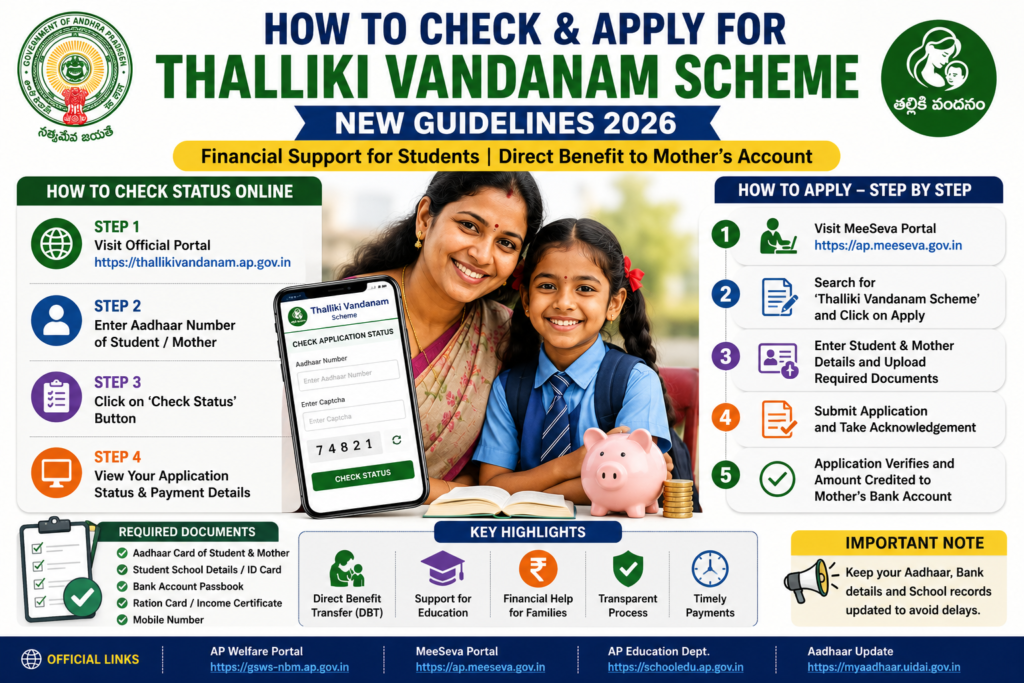
Documents Required
Applicants may need:
- Student Aadhaar Card
- Mother’s Aadhaar Card
- Aadhaar-linked Bank Account
- Active Mobile Number
- School Admission Details
- Student ID Number
- Family Records
- NPCI Mapping Confirmation
Eligibility Table
| Requirement | Status |
|---|---|
| Andhra Pradesh Resident | Required |
| Student Enrollment | Required |
| Aadhaar Verification | Required |
| Bank Account | Required |
| NPCI Mapping | Required |
| eKYC | Required |
Payment Release Process
- School Verification
- Aadhaar Verification
- NPCI Mapping Check
- Beneficiary Approval
- DBT Transfer
- Payment Credit
➤ Related Scheme: NTR Baby Kit Scheme 2025: Eligibility, Benefits & Distribution Details
Common Mistakes Parents Make
- Wrong Aadhaar Number
- Bank Account Not Linked
- Inactive Mobile Number
- Student Record Mismatch
- NPCI Not Enabled
How to Check Thalliki Vandanam Status
Parents can monitor beneficiary status through official welfare portals.
Steps to Check Status
- Visit the official welfare portal.
- Open Beneficiary Status section.
- Enter Aadhaar Number or Student Details.
- Complete OTP verification if required.
- View beneficiary and payment status.
Possible status results include:
- Under Verification
- Approved
- Payment Processed
- Pending Verification
- Additional Verification Required
➤ Check Also: Adabidda Nidhi Scheme 2025: Eligibility, Benefits, Documents & Latest Updates
Official links
| Action | Link |
|---|---|
| Andhra Pradesh Government Portal | Visit Website |
| Thalliki Vandanam Government Updates | View Notifications |
| UIDAI Aadhaar Services | Open Portal |
| AP School Education Department | Visit Department |
| AP MeeSeva Services | Access Services |
Aadhaar and NPCI Mapping Importance
Many applications face delays because Aadhaar and bank account details are not properly linked.
Before payment release, ensure:
- Aadhaar is linked to the bank account.
- NPCI mapping is active.
- Mobile number is updated.
- Bank account is active.
- eKYC is completed.
Even small mismatches can stop DBT payments.
How to Verify Aadhaar-Bank Linking
- Visit your bank branch.
- Request Aadhaar seeding status.
- Confirm NPCI mapping status.
- Ensure the account is active.
- Complete eKYC if required.
Payment Structure Table
| Component | Amount |
|---|---|
| Total Assistance | ₹15,000 |
| DBT Amount | ₹13,000 |
| School Development | ₹2,000 |
Common Reasons for Payment Delays
Although many beneficiaries receive payments successfully, some cases may experience delays due to verification issues.
Common reasons include:
- Aadhaar number mismatch in student or parent records.
- Bank account not linked with Aadhaar.
- NPCI mapping not completed.
- Inactive or dormant bank account.
- Incorrect IFSC code or bank details.
- Student records not updated in the education database.
- Mobile number not linked with Aadhaar or bank account.
- Pending eKYC verification.
- Duplicate beneficiary records identified during scrutiny.
- Ongoing verification by concerned authorities.
Parents should verify all records before the payment cycle begins to reduce the chances of delays.
Who May Not Receive Benefits?
Beneficiaries may face payment delays or may not receive assistance if:
- Aadhaar is not linked with the bank account.
- NPCI Aadhaar mapping is incomplete.
- Student records are not available in the education department database.
- Duplicate beneficiary records are detected during verification.
- eKYC verification remains pending.
- The linked bank account is inactive, dormant, or closed.
- School enrollment details do not match official records.
- Required documents are missing or incorrect.
How to Check NPCI Mapping Status
- Visit your bank branch.
- Request Aadhaar Seeding Status.
- Confirm NPCI Mapper Status.
- Verify DBT eligibility.
- Update Aadhaar-bank linking if required.
How to Check Payment Credit Status
- Check bank account statement.
- Verify DBT transaction details.
- Contact the bank if payment is not reflected.
- Visit MeeSeva for beneficiary verification.
- Follow official government notifications for payment updates.
➤ Read More: NTR Vidyalakshmi & NTR Kalyana Lakshmi Scheme 2026: ₹1 Lakh Loan for DWCRA Women
Before Applying, Check These Details
Parents should verify:
- Student Aadhaar details
- Mother’s Aadhaar details
- Bank account information
- NPCI mapping status
- Mobile number availability
- School admission records
Correct information improves the chances of successful verification.
Important Tips for Parents
- Complete Aadhaar verification early.
- Keep bank account active.
- Verify NPCI mapping status.
- Maintain updated school records.
- Keep copies of submitted documents.
- Follow only official government notifications.
- Avoid relying on social media rumors.
Frequently Asked Questions (FAQs)
1. When will Thalliki Vandanam payment be released?
The Andhra Pradesh Government releases Thalliki Vandanam assistance after beneficiary verification, Aadhaar authentication, bank account validation, and NPCI mapping are completed. Beneficiaries should regularly check official government notifications for the latest payment release dates and district-wise updates.
2. How can I check Thalliki Vandanam beneficiary status?
Applicants can check their status through the official welfare portal by entering Aadhaar Number, Student ID, or other required details. The portal may display statuses such as Under Verification, Approved, Payment Processed, or Pending Verification.
3. Is NPCI mapping mandatory for receiving the payment?
Yes. NPCI Aadhaar mapping is generally required for Direct Benefit Transfer (DBT) payments. If Aadhaar is not properly linked with the beneficiary’s bank account, payment processing may be delayed or unsuccessful.
4. Can private school students apply for Thalliki Vandanam?
Eligibility for private school students depends on the latest government guidelines and verification rules. Parents should refer to official notifications issued by the Andhra Pradesh Government to confirm whether their child’s institution is covered under the scheme.
5. What documents are required for Thalliki Vandanam verification?
Applicants may be required to provide:
- Student Aadhaar Card
- Mother’s Aadhaar Card
- Aadhaar-linked Bank Account Details
- Active Mobile Number
- School Admission Records
- Student ID Number
- NPCI Mapping Confirmation
- Other supporting documents as prescribed by the authorities
6. Why is my Thalliki Vandanam payment delayed?
Payment delays may occur due to Aadhaar mismatch, inactive bank accounts, NPCI mapping issues, incomplete eKYC, incorrect student records, mobile number mismatch, or pending verification by the concerned authorities.
7. How much financial assistance is provided under the scheme?
Under the latest guidelines, eligible beneficiaries may receive total assistance of ₹15,000 per student. Out of this amount, ₹13,000 is generally transferred through DBT, while ₹2,000 is allocated towards school development and infrastructure activities.
8. Is Aadhaar verification compulsory?
Yes. Aadhaar verification is an important part of beneficiary identification and DBT payment processing. Beneficiaries should ensure that Aadhaar details match school records and bank account information.
9. When will Thalliki Vandanam payment be credited?
Payment dates are announced by the government after completion of beneficiary verification and approval processes. Beneficiaries should follow official notifications for the latest updates.
Key Takeaways
- Eligible students may receive ₹15,000 assistance.
- ₹13,000 is transferred through DBT.
- Aadhaar and NPCI mapping are mandatory.
- Verification includes school, bank, and beneficiary records.
- Incorrect information may delay payments.
- Only official government updates should be considered final.
Conclusion
The Thalliki Vandanam Scheme 2026 is an important education support initiative aimed at helping eligible families manage student-related expenses. Parents should ensure Aadhaar verification, NPCI mapping, bank account readiness, and accurate school records before the verification process begins. Keeping all information updated can help ensure timely benefit disbursement and avoid unnecessary delays.

Venkatesh is the Content Lead and Researcher at UNQ Information. He researches government schemes, pension programs, citizen services, and welfare initiatives related to Andhra Pradesh and Telangana. He regularly publishes updates and educational content to help readers understand eligibility criteria, required documents, application procedures, benefit details, and important government announcements in a simple and easy-to-understand format.
Thalliku vandanam
My ebility is ok or not ok
Jawad AHMAD