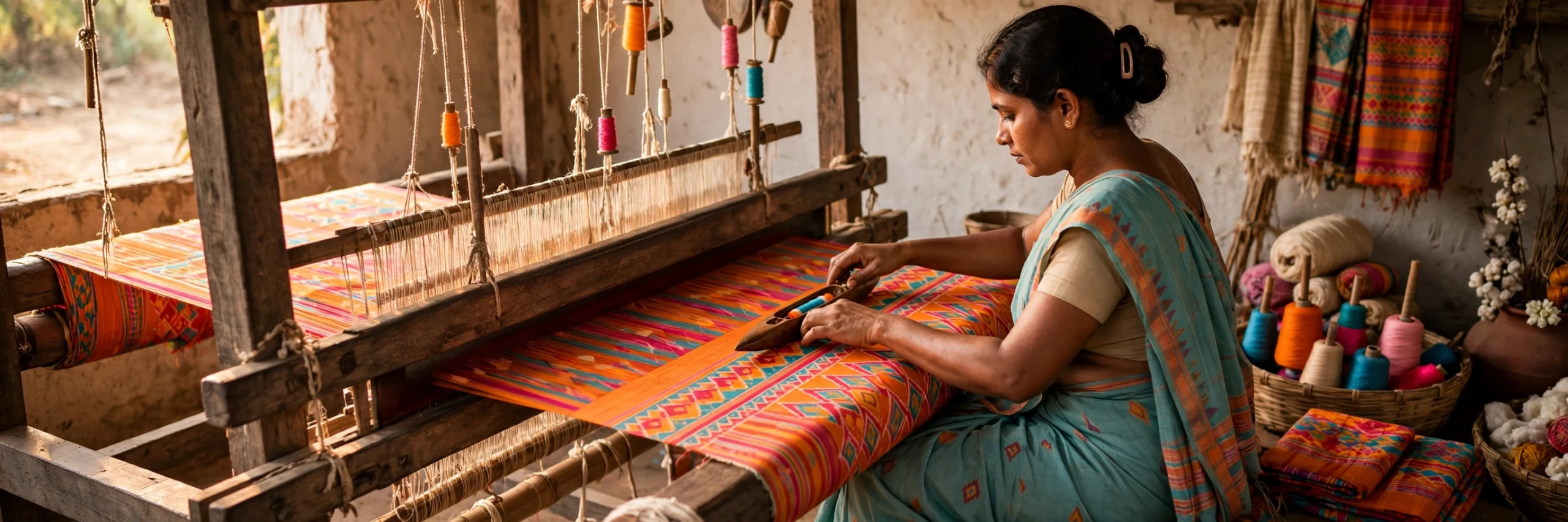

The Nethanna Sevalo Scheme is Andhra Pradesh’s new annual support for handloom weaver families. Under the scheme, every below poverty line (BPL) handloom weaver family in the state gets ₹25,000 a year. The state cabinet approved the scheme on 23 July 2026, and Chief Minister N. Chandrababu Naidu launched it on 7 August 2026 — National Handloom Day — at Chirala in Bapatla district. On launch day, ₹179 crore was paid to 71,536 weaver families at ₹25,000 each.
The scheme replaces YSR Nethanna Nestham, which paid ₹24,000 a year to a weaver family that owned a handloom. The new scheme raises the annual amount by ₹1,000 and widens the cover: it is for every active weaver operating a loom in a BPL family, irrespective of age and regardless of how many looms the family has. This post explains who gets the money, how the first payment was made, what other help was announced for weavers, and what to do if your family was left out.
What Is the Nethanna Sevalo Scheme?
The Nethanna Sevalo Scheme is a state welfare scheme for handloom weavers in Andhra Pradesh. The cabinet approved it on 23 July 2026, and the decision was announced by Information and Public Relations Minister Kolusu Parthasarathy. The cabinet note said the scheme would pay ₹25,000 a year to BPL handloom weaver families, and it put the expected coverage at 51,952 weavers at a cost of ₹129.88 crore to the state exchequer. The New Indian Express reported the cabinet decision on 24 July 2026.
The scheme was launched two weeks later, on 7 August 2026, by Chief Minister N. Chandrababu Naidu at Chirala in Bapatla district. Handlooms Minister S. Savitha was present at the launch. On the day, the government paid ₹179 crore to 71,536 weaver families — ₹25,000 to each family — as the first instalment. The Deccan Chronicle reported the launch and the first payment, and the Press Trust of India previewed the launch on 3 August 2026. The amount is paid once a year to the family, not every month, and it is income support, not a loan, so it does not have to be repaid.
Nethanna Sevalo Scheme: Key Facts
| Item | Detail |
|---|---|
| Scheme | Nethanna Sevalo Scheme |
| State | Andhra Pradesh |
| Annual benefit | ₹25,000 per BPL handloom weaver family |
| Approved by the cabinet | 23 July 2026 |
| Launched | 7 August 2026, National Handloom Day, Chirala, Bapatla district |
| Launched by | Chief Minister N. Chandrababu Naidu |
| First payment | ₹179 crore to 71,536 weaver families on 7 August 2026 |
| Cabinet estimate at approval | 51,952 weavers; ₹129.88 crore a year |
| Who gets it | BPL handloom weaver family; every active weaver operating a loom |
| Age limit | None — the benefit is paid irrespective of age |
| Replaces | YSR Nethanna Nestham (₹24,000 a year) |
| Other support announced | NTR Bharosa pension for weavers above 50; free electricity up to 200 units a month |
| Next payment | Annual scheme; next instalment date not yet announced as of 7 November 2026 |
Who Is Eligible for the Nethanna Sevalo Scheme?
The eligibility rules announced with the scheme are simple. A family qualifies if it is a below poverty line family in Andhra Pradesh with an active handloom weaver who operates a loom. The cabinet announcement said every active weaver operating a loom in the family would be eligible, irrespective of age and of the number of looms. There is no upper or lower age limit for the ₹25,000 payment itself.
The payment is made per family, not per weaver and not per loom. The launch figures confirm this: 71,536 families received ₹25,000 each, which adds up to about ₹179 crore (71,536 multiplied by ₹25,000 is ₹178.84 crore). A family with two weavers, or with more than one loom, still gets one annual payment of ₹25,000 for the family.
That is a change from the earlier scheme. YSR Nethanna Nestham, introduced by G.O.Ms.No.89 on 23 October 2019, paid ₹24,000 a year to every weaver family that owned a handloom, to help families modernise their work and compete with power looms. The new scheme drops the ownership test in favour of an activity test: the weaver must be active and operating a loom, and the family must be below the poverty line.
How Much Is Paid, and When?
The scheme pays ₹25,000 a year to each eligible family, in a single annual instalment. The first year’s money was paid in one go on launch day, 7 August 2026, when ₹179 crore was credited to 71,536 families.
Two different coverage figures have appeared in reports. When the cabinet approved the scheme on 23 July 2026, the estimate was 51,952 weavers at a cost of ₹129.88 crore a year. At the launch a fortnight later, the government actually paid 71,536 families, about ₹179 crore. The July figure was the estimate at approval; the launch figure is what was paid.
The scheme is an annual one, so a further instalment would fall due in the next yearly cycle. No date for the next instalment had been announced in the sources checked for this article as of 7 November 2026. We track scheme payment dates on this site in our November 2026 payment calendar, and we will update that calendar when a date is announced.
How Nethanna Sevalo Replaced YSR Nethanna Nestham
For several years, the main cash support for handloom weavers in Andhra Pradesh was YSR Nethanna Nestham. It paid ₹24,000 a year to a weaver family that owned a handloom. That scheme has now been replaced. We explained on this site in September that weaver support in AP after Nethanna Nestham stopped was limited to a pension and other help — and the Nethanna Sevalo Scheme is the new cash support that took its place, at a higher amount of ₹25,000 a year.
The change is more than a ₹1,000 increase. The old scheme was tied to owning a loom; the new scheme is tied to being an active weaver who operates a loom, and to the family being below the poverty line. It also removes any age condition. Families who used to receive ₹24,000 under Nethanna Nestham should not expect that payment to continue under the old name. The payment to look for now is the ₹25,000 under the Nethanna Sevalo Scheme.
What Else Was Announced for Weavers on Launch Day?
The ₹25,000 was the headline, but it was not the only support announced for weavers around the launch. Handloom weavers above the age of 50 are covered under the NTR Bharosa pension, and launch-day reports put this at ₹4,000 a month for about 85,000 weavers, costing about ₹35 crore a month and about ₹420 crore a year. The pension is separate from the ₹25,000 annual payment, so a weaver family with an older member can receive both.
Handloom weaver families also get free electricity up to 200 units a month, and powerloom units get free electricity up to 500 units a month. The Deccan Chronicle preview of the launch reported both the pension cover and the free-electricity limits, along with thrift fund support and Mudra loans for weavers. The Chief Minister also said the government would continue bearing the housing expenses of weavers.
Weaver families who are below the poverty line can also use the health cover already available to them. Dr NTR Vaidya Seva covers treatment for eligible families in empanelled hospitals, and children in weaver families who are studying can check the scholarship season in AP for fee reimbursement and maintenance allowances.
Why the Launch Was Held on National Handloom Day
National Handloom Day is observed every year on 7 August. The date was chosen because the Swadeshi Movement was launched on 7 August 1905. The Government of India designated 7 August as National Handloom Day in 2015, and it was first observed on 7 August 2015. The 2026 launch was therefore held on the 12th National Handloom Day, which is why the Chief Minister launched the scheme on that date at Chirala, in Bapatla district. Andhra Pradesh has some of the best-known handloom weaves in India — Dharmavaram, Venkatagiri and Mangalagiri sarees, and Uppada Jamdani — and the state handloom cooperative society, APCO, was founded in 1958 to market the cloth its weavers make.
How to Check Whether Your Family Was Included
The launch reports did not describe a new online application form or a status-check website for the Nethanna Sevalo Scheme. The first payment went to 71,536 families that the government had identified in its weaver records. For the launch, applications from weavers were invited by 5 pm on 5 August 2026, so that the payment could be made on 7 August. That date has passed, and it was a launch-round deadline, not a standing last date for the scheme.
If you are a weaver family, first check the bank account of the family member whose name is on the weaver record for a credit of ₹25,000 around 7 August 2026. If there is no credit, ask at your village or ward secretariat, or at the district handloom office, whether your family is on the weaver list and what record is missing — a BPL or ration card entry, a weaver identity record, or a bank account that is not Aadhaar-seeded. Take your Aadhaar card, ration card and bank passbook when you go. Do not pay anyone who offers to add your name to the list for a fee; enrolment under the scheme was done through government records, not through agents.
We verify every scheme against government orders and news reports before publishing — see how UNQ Information verifies every scheme — and if a status-check portal or a new application window is announced, we will add it to this post.
Nethanna Sevalo Scheme: Frequently Asked Questions
Is the ₹25,000 paid per weaver or per family?
Per family, per year. On launch day, 71,536 BPL handloom weaver families received ₹25,000 each, which came to about ₹179 crore in total.
I was getting YSR Nethanna Nestham. Will I still get ₹24,000?
No. YSR Nethanna Nestham was replaced by the Nethanna Sevalo Scheme. The new support is ₹25,000 a year, paid to BPL families with an active weaver operating a loom.
Is there a last date to apply for the Nethanna Sevalo Scheme?
The launch-round applications were invited by 5 pm on 5 August 2026, so the first payment could be made on 7 August 2026. No new application deadline had been published in the sources checked for this article as of 7 November 2026.
Sources
- The New Indian Express — Andhra cabinet approves Nethanna Sevalo scheme, 24 July 2026
- Deccan Chronicle — Naidu launches Nethanna Sevalo scheme, 7 August 2026
- Deccan Chronicle — CM to launch Nethanna Sevalo scheme on Aug. 7
- ThePrint (PTI) — Nethanna Sevalo scheme: ₹25,000 annual aid to handloom weavers from Aug. 7
- Vikaspedia — Nethanna Sevalo Scheme
Figures in this article are taken from the sources above.