
Access to affordable credit remains one of the biggest challenges for many low-income families in Andhra Pradesh. Educational expenses, professional course fees, hostel charges, and marriage-related costs often require substantial financial resources, forcing families to depend on high-interest private borrowing.
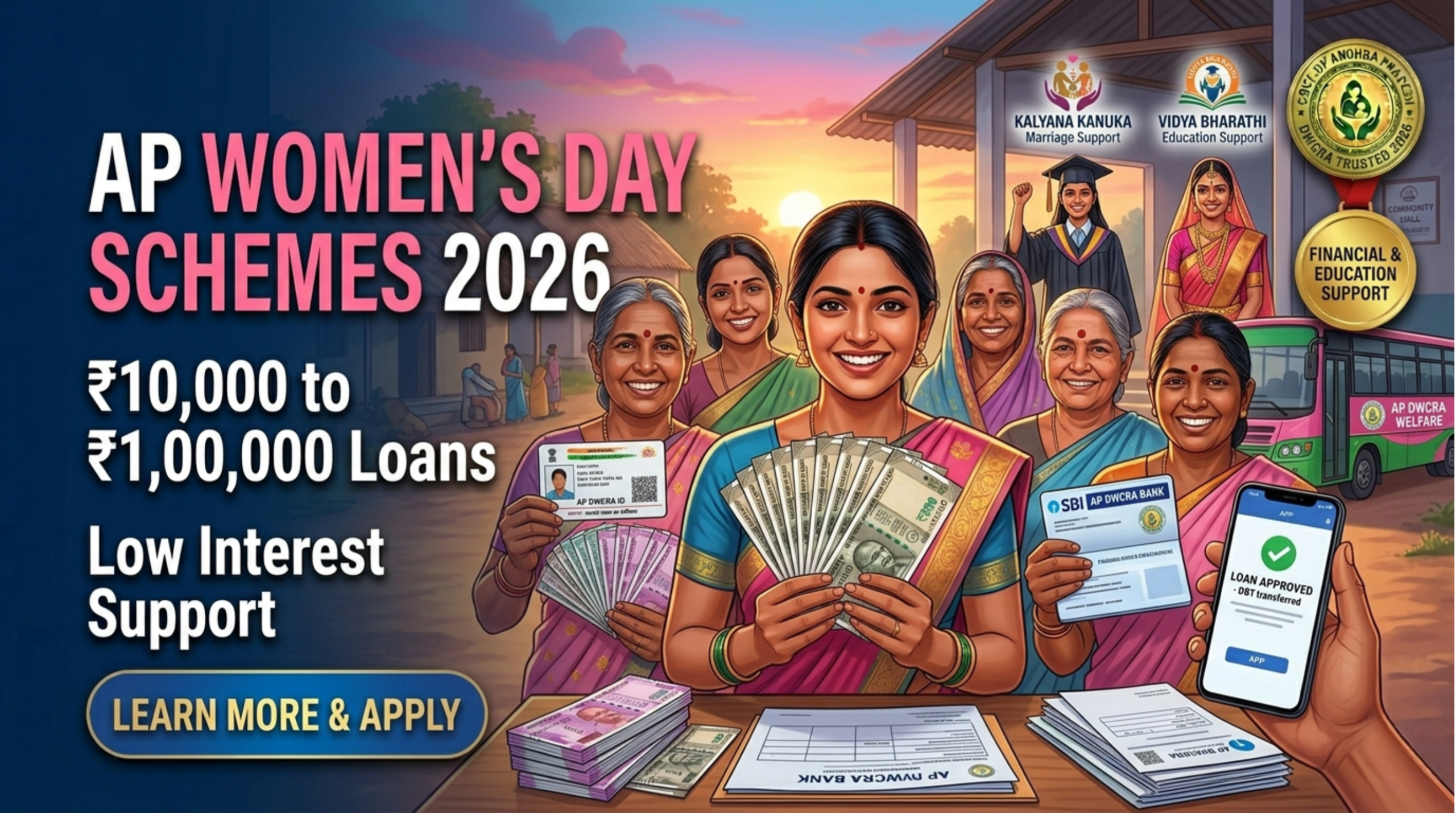
To provide affordable financial support, the Andhra Pradesh Government has announced special welfare loan initiatives for eligible DWCRA Self-Help Group (SHG) women. Public announcements indicate that the NTR Vidyalakshmi Scheme 2026 and NTR Kalyana Lakshmi Scheme are intended to provide low-interest loans ranging from ₹10,000 to ₹1,00,000 for education and marriage-related needs.
These schemes are expected to benefit thousands of women belonging to Self-Help Groups by providing structured financial assistance with lower interest rates and longer repayment periods.
Many beneficiaries are searching for eligibility criteria, loan amounts, required documents, repayment conditions, verification procedures, and approval timelines. This guide explains the available information in a practical and easy-to-understand format.
Quick Scheme Overview
| Particulars | Details |
|---|---|
| Scheme Names | NTR Vidyalakshmi & NTR Kalyana Lakshmi |
| State | Andhra Pradesh |
| Beneficiaries | DWCRA / SHG Women |
| Loan Amount | ₹10,000 to ₹1,00,000 |
| Interest Rate | 4% (Pavala Vaddi) |
| Repayment Period | Up to 48 Months |
| Loan Purpose | Education and Marriage Expenses |
| Mode of Assistance | Loan Support |
| Verification | SHG, Aadhaar and Bank Verification |
What Are These Schemes?
The NTR Vidyalakshmi and NTR Kalyana Lakshmi schemes are welfare-oriented financial assistance initiatives aimed at supporting women who are members of Self-Help Groups.
Instead of depending on high-interest private loans, eligible women may access institutional credit at subsidized interest rates for specific family needs such as children’s education and marriage-related expenses.
The schemes are designed to reduce financial stress while promoting educational advancement and social welfare among economically weaker households.
➤ Read More: Digital Lakshmi Scheme 2026: Digital Entrepreneurship Support for Women
Why Were These Schemes Introduced?
Many families face financial difficulties during key life events.
Common expenses include:
- School and college fees
- Hostel charges
- Professional course expenses
- Educational materials
- Marriage arrangements
- Ceremony-related costs
- Essential household expenditures associated with education and marriage
The government intends to reduce dependence on informal borrowing and improve access to affordable credit through women-led Self-Help Groups.
NTR Vidyalakshmi Scheme 2026
The NTR Vidyalakshmi Scheme is intended to support educational expenses of children belonging to eligible SHG families.
Key Features
| Particulars | Details |
| Purpose | Educational Expenses |
| Eligible Applicants | DWCRA Women |
| Loan Amount | ₹10,000 to ₹1,00,000 |
| Interest Rate | 4% |
| Repayment Period | Up to 48 Months |
| Child Limit | Up to Two Children |
Educational Expenses Covered
The loan may be used for:
- School fees
- College fees
- Hostel expenses
- Examination fees
- Educational materials
- Skill development courses
NTR Kalyana Lakshmi Scheme
The NTR Kalyana Lakshmi Scheme focuses on supporting marriage-related expenses of eligible beneficiaries.
Key Features
| Particulars | Details |
| Purpose | Marriage Expenses |
| Eligible Applicants | DWCRA Women |
| Loan Amount | ₹10,000 to ₹1,00,000 |
| Interest Rate | 4% |
| Repayment Period | Up to 48 Months |
| Coverage | One Eligible Daughter |
Marriage-Related Support
The assistance is intended to help families manage financial requirements associated with marriage arrangements while reducing dependence on high-cost borrowing.
Eligibility Criteria
Applicants are generally expected to satisfy the following conditions:
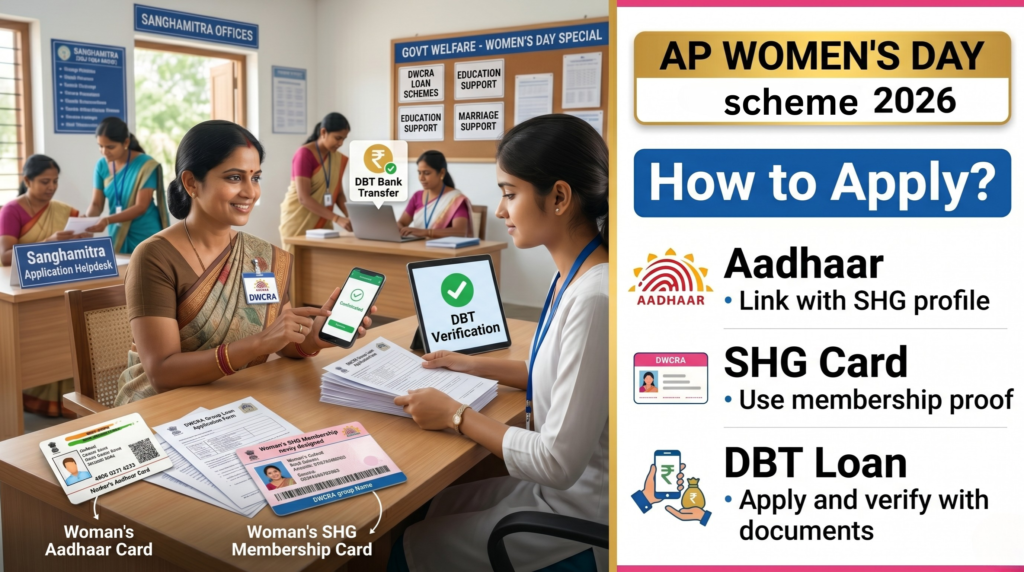
- Active DWCRA / SHG membership
- Minimum membership period as prescribed
- Valid Aadhaar details
- Active bank account
- Educational or marriage-related requirement
- Successful verification by relevant authorities
Eligibility is subject to government guidelines and verification procedures.
➤ Check Also: Nirudhyoga Bruthi Scheme 2026: Eligibility, Benefits, Documents & Latest Updates
Documents Required
Applicants may need:
- Aadhaar Card
- SHG Membership Card
- Bank Passbook
- Ration Card
- Income Certificate
- Caste Certificate (where applicable)
- Student Documents (for education loans)
- Marriage-related Documents (for marriage loans)
- Passport Size Photographs
Additional documents may be requested during verification.
How Verification Works
Before approval, authorities generally conduct multiple checks.
Step 1: Membership Verification
SHG membership status is verified.
Step 2: Aadhaar Authentication
Beneficiary identity is validated.
Step 3: Bank Account Verification
Authorities verify DBT readiness and account details.
Step 4: Purpose Verification
Educational or marriage-related supporting documents are reviewed.
Step 5: Final Approval
Eligible applications are processed for sanction.
Common Reasons Why Applications Are Rejected
Applications may face rejection because of:
- Less than required SHG membership duration
- Aadhaar mismatch
- Incorrect bank details
- Incomplete documentation
- Duplicate applications
- Verification failures
- Inaccurate beneficiary information
Applicants should carefully verify all records before submission.
➤ Read Also: NTR Baby Kit Scheme 2025: Free Baby Care Kit Benefits, Eligibility & Distribution Details
What Happens After Approval?
After approval, the sanctioned amount may be released according to the prescribed process.
Beneficiaries should:
- Maintain repayment schedules
- Preserve loan records
- Keep contact details updated
- Follow repayment obligations regularly
Timely repayment may improve future access to financial assistance programs.
Beneficiary Checklist
Before applying, ensure:
✓ Aadhaar details are correct
✓ Bank account is active
✓ SHG membership records are updated
✓ Mobile number is operational
✓ Required supporting documents are available
✓ Educational or marriage-related documents are ready
✓ Personal information matches official records
Potential Benefits of the Schemes
These initiatives may provide:
- Affordable access to credit
- Lower borrowing costs
- Support for education
- Support for marriage expenses
- Structured repayment options
- Reduced dependence on informal lenders
- Improved financial stability for SHG families
➤ Pregnant women and new mothers can also read our detailed guide on NTR Baby Kit Scheme 2025, which explains eligibility, free baby care items, beneficiary verification, and distribution details.
Important Official Resources
| Action | Link |
|---|---|
| SERP Andhra Pradesh | Visit Portal |
| Official Government Website | Open Website |
| Aadhaar Services | Open UIDAI |
| DBT Benefit Information | Check Details |
| National Government Portal | Visit Portal |
Frequently Asked Questions
1.What is the loan amount available under these schemes?
Public announcements indicate loan assistance ranging from ₹10,000 to ₹1,00,000 depending on eligibility and requirements.
2.Who can apply?
Eligible DWCRA / Self-Help Group women who satisfy prescribed conditions may apply.
3.What is the interest rate?
Reports indicate a subsidized interest rate of around 4% under the proposed framework.
4.What is the repayment period?
The repayment period is expected to extend up to 48 months.
5.Can the loan be used for any purpose?
The schemes are intended specifically for education-related and marriage-related expenses.
Conclusion
The NTR Vidyalakshmi and NTR Kalyana Lakshmi schemes represent an effort to improve access to affordable credit for eligible DWCRA women in Andhra Pradesh. By providing low-interest loans for education and marriage-related expenses, the schemes may help reduce financial pressure on economically vulnerable families. Applicants should keep all records updated, verify eligibility requirements carefully, and follow official announcements for application procedures and implementation updates.
Venkatesh is the Content Lead and Researcher at UNQ Information. He researches government schemes, pension programs, citizen services, and welfare initiatives related to Andhra Pradesh and Telangana. He regularly publishes updates and educational content to help readers understand eligibility criteria, required documents, application procedures, benefit details, and important government announcements in a simple and easy-to-understand format.
Ok,nice