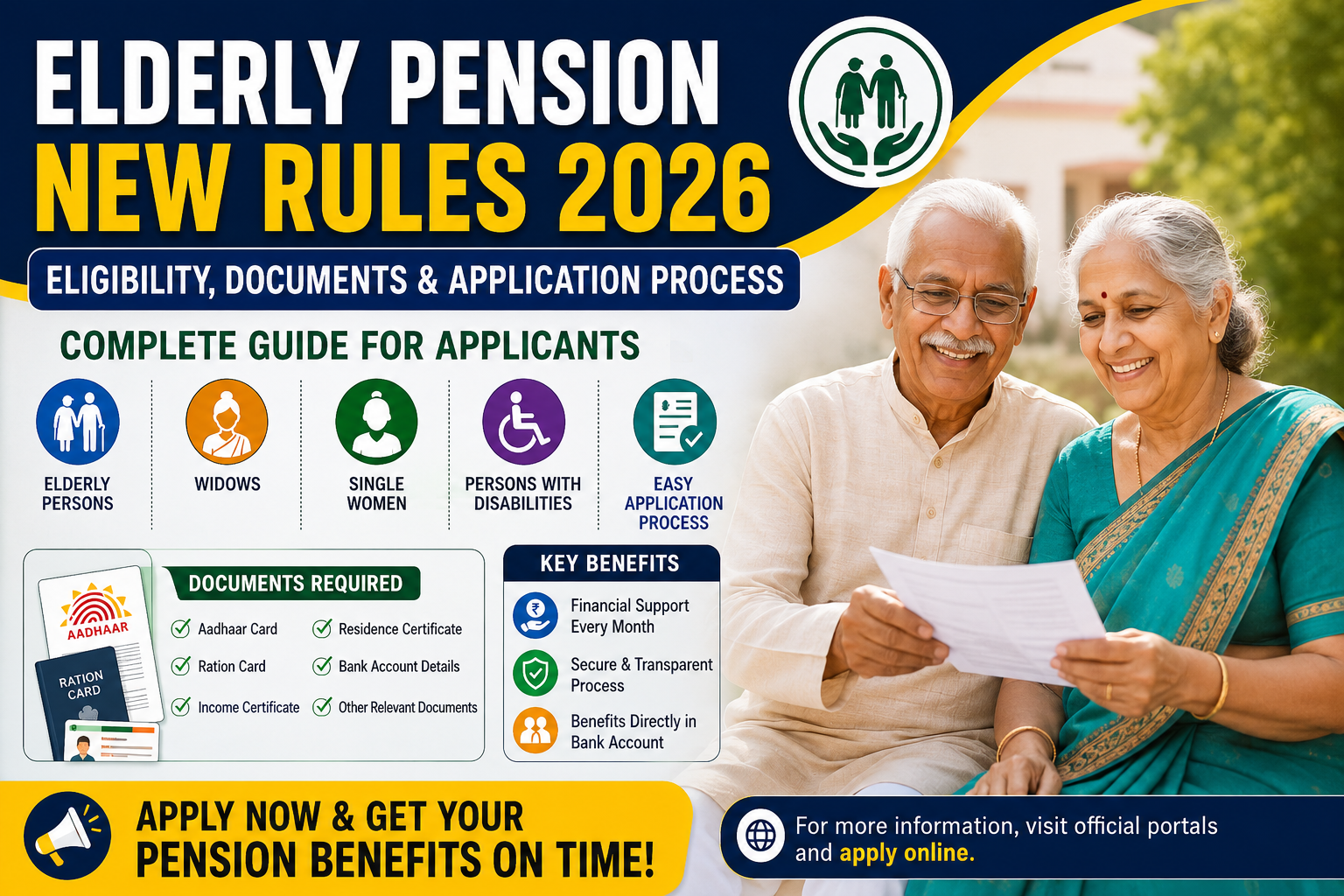

The NTR Bharosa Pension Scheme is a welfare program implemented by the Government of Andhra Pradesh that provides monthly pension assistance ranging from ₹4,000 to ₹15,000 to eligible beneficiaries under various categories including old age, widow, disability, transgender, fishermen, weavers and bedridden pensions.
The scheme covers multiple beneficiary categories including senior citizens, widows, persons with disabilities, transgender persons, fishermen, weavers, and bedridden individuals. Pension amounts vary by category and are transferred directly to beneficiaries through the Direct Benefit Transfer (DBT) system.
NTR Bharosa Pension Scheme Overview
| Particulars | Details |
|---|---|
| Scheme Name | NTR Bharosa Pension Scheme |
| State | Andhra Pradesh |
| Beneficiaries | Senior Citizens, Widows, Disabled Persons, Single Women and Other Eligible Categories |
| Payment Mode | Direct Benefit Transfer (DBT) |
| Application Mode | Village Secretariat / Ward Secretariat |
| Verification Method | Aadhaar-Based Verification |
| Pension Distribution | Monthly |
| Purpose | Financial Support for Eligible Beneficiaries |
Latest NTR Bharosa Pension Amounts
The Andhra Pradesh Government provides different pension amounts depending on the beneficiary category.
| Category | Monthly Pension Amount |
| Old Age Pension | ₹4,000 |
| Widow Pension | ₹4,000 |
| Single Women Pension | ₹4,000 |
| Fishermen Pension | ₹4,000 |
| Weavers Pension | ₹4,000 |
| Toddy Tappers Pension | ₹4,000 |
| Transgender Pension | ₹4,000 |
| ART (PLHIV) Pension | ₹4,000 |
| Disability Pension | ₹6,000 |
| Fully Disabled Persons | ₹10,000 |
| Chronic Kidney Disease Patients (CKDU) | ₹10,000 |
| Bedridden Persons | ₹15,000 |
Pension Categories Covered Under NTR Bharosa
Bedridden Pension provides ₹15,000 per month to eligible bedridden beneficiaries.
Old Age Pension provides ₹4,000 per month to eligible senior citizens.
Widow Pension provides ₹4,000 per month to eligible widows.
Single Women Pension provides ₹4,000 per month to eligible single women.
Disability Pension provides ₹6,000 per month to eligible persons with disabilities.
Fully Disabled Pension provides ₹10,000 per month.
CKDU Pension provides ₹10,000 per month to eligible chronic kidney disease patients.
Who Can Apply for NTR Bharosa Pension?
The NTR Bharosa Pension Scheme is intended for eligible residents of Andhra Pradesh who belong to approved beneficiary categories. Senior citizens, widows, single women, persons with disabilities, fishermen, weavers, toddy tappers, transgender persons, ART (PLHIV) beneficiaries, CKDU patients and bedridden persons may apply subject to verification and government guidelines.
➤ Read Also: AP Widow Pension 2026: Eligibility, Documents & Application Process
Who Is Not Eligible?
Certain applicants may not qualify for benefits under the NTR Bharosa Pension Scheme. Applications may be rejected if incorrect, misleading, or false information is provided during the verification process.
The following categories are generally not eligible:
- Applicants submitting false or misleading information.
- Individuals using forged, invalid, or tampered documents.
- Duplicate applications submitted by the same beneficiary.
- Persons who do not belong to any eligible pension category.
- Applicants who fail Aadhaar or document verification requirements.
- Beneficiaries whose records contain significant mismatches in personal information.
- Applicants who do not satisfy the eligibility conditions prescribed by the Government.
All applications are subject to verification by the concerned authorities before approval.
How to Check Pension Status?
- Visit the official pension portal.
- Enter Aadhaar number or beneficiary details.
- Submit the information.
- View beneficiary status and payment details.
Direct Benefit Transfer Section
Pension amounts are transferred through Aadhaar-linked systems and approved pension distribution mechanisms. Beneficiaries should ensure that Aadhaar, bank account details and mobile numbers are updated to avoid payment delays.
Beneficiary Coverage
According to government reports, the NTR Bharosa Pension Scheme benefits more than 60 lakh beneficiaries across Andhra Pradesh.
➤ Related Pension Scheme: NTR Bharosa Pensions Scheme 2026: Eligibility, Benefits & Payment Details
Common Reasons Why Pension Payments Stop
- Aadhaar and bank account mismatch
- eKYC pending
- Duplicate beneficiary records
- Incorrect category selection
- Invalid disability certificate
- Incomplete field verification
Eligibility Criteria
For Old Age Pension
Applicants should be residents of Andhra Pradesh and belong to eligible low-income households as per government guidelines. Aadhaar verification and household data verification may be required during the approval process. Final eligibility is determined after verification by the concerned authorities.
For Widow Pension
Widow pension applicants must provide valid proof of widowhood and satisfy the eligibility conditions prescribed by the Government. Supporting documents and verification may be required before approval NTR Bharosa Pension Scheme.
For Single Women Pension
Single women who meet the conditions notified by the Government may apply for pension benefits. Applicants may be required to submit supporting documents during the verification process.
For Disability Pension
Applicants should possess a valid disability certificate or SADAREM certificate issued by the competent authority. Pension eligibility and benefit amount may vary depending on the percentage and category of disability.
For Other Categories
Beneficiaries belonging to categories such as fishermen, weavers, toddy tappers, transgender persons, ART (PLHIV) beneficiaries, CKDU patients, and bedridden persons may apply subject to category-specific eligibility conditions and verification requirements prescribed by the Government.
➤ Check Also: Talliki Vandanam Scheme 2026: Eligibility, Benefits & Latest Updates
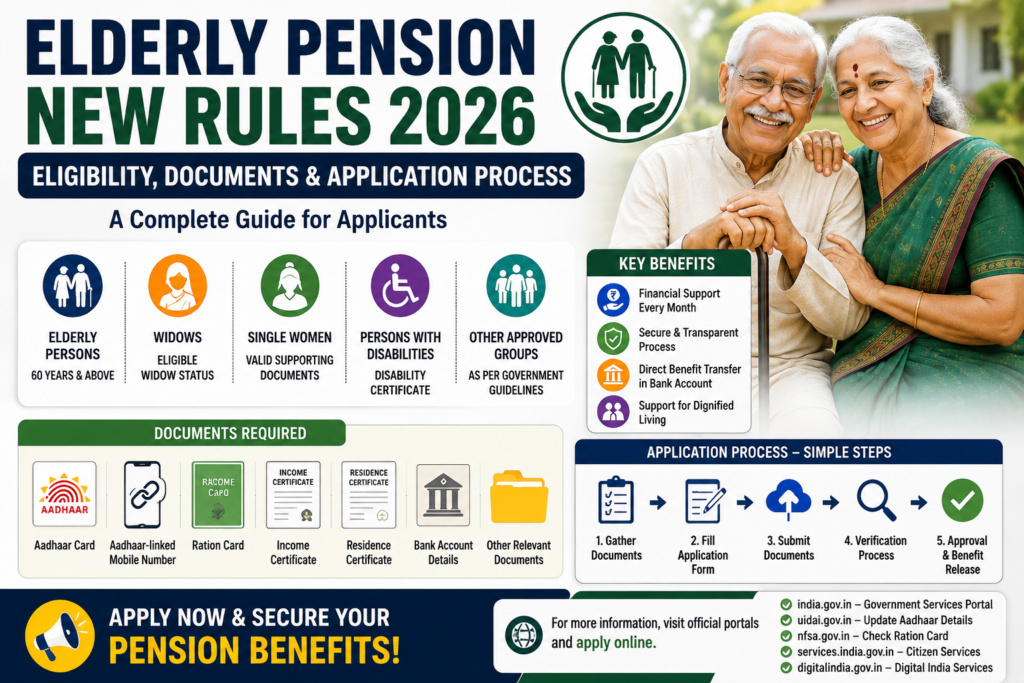
Documents Required
| Document | Purpose |
|---|---|
| Aadhaar Card | Identity Verification |
| Bank Passbook | Pension Credit |
| Ration Card | Household Verification |
| SADAREM Certificate | Disability Pension |
Aadhaar Verification Requirement
Applicants should ensure that Aadhaar details match the information provided in the application form and bank account records. Mismatched information may delay verification or pension disbursement.
Importance of Matching Documents
One of the most common reasons for application delays is a mismatch in personal information across documents.
Applicants should verify:
- Name spelling
- Date of birth
- Address details
- Aadhaar information
- Bank account details
- Mobile number
Even minor errors can create verification issues.
Step-by-Step Application Process
Step 1: Visit the Nearest Secretariat
Applicants can visit their nearest Village Secretariat or Ward Secretariat.
Step 2: Obtain the Application Form
Collect the pension application form from the concerned office.
Step 3: Fill in the Required Details
Enter all personal and family information accurately.
Step 4: Submit Supporting Documents
Attach all required documents and certificates.
Step 5: Aadhaar Verification
Officials will verify Aadhaar and other personal details.
Step 6: Field Verification
In some cases, field-level verification may be conducted.
Step 7: Approval Process
Authorities review the application and verify eligibility.
Step 8: Pension Disbursement
After approval, the pension amount is credited directly to the beneficiary’s bank account.
Common Reasons for Pension Rejection
Many pension applications are rejected due to avoidable mistakes.
Common reasons include:
- Incorrect Aadhaar information.
- Name mismatch across documents.
- Invalid bank account details.
- Missing supporting documents.
- Duplicate applications.
- Incomplete application forms.
- Failure to meet eligibility requirements.
Applicants should carefully review all information before submission.
➤ Read More: Adabidda Nidhi Scheme 2025: Eligibility, Benefits, Documents & Latest Updates
Official links
| Action | Link |
|---|---|
| NTR Bharosa Pension Portal | Check Pension Status |
| GSWS (Grama/Ward Sachivalayam) | Access Services |
| UIDAI Aadhaar Services | Open Aadhaar Portal |
Important Tips Before Applying
Before submitting your application:
- Verify Aadhaar details carefully.
- Ensure bank account details are correct.
- Keep all certificates updated.
- Use an active mobile number.
- Submit clear copies of documents.
- Review the application thoroughly before submission.
- Maintain copies of all submitted documents.
Scheme History
The NTR Bharosa Pension Scheme replaced the earlier YSR Pension Kanuka scheme after the change in government in Andhra Pradesh. Pension amounts for several categories were increased from July 2024 onwards, providing enhanced financial assistance to eligible beneficiaries.
Frequently Asked Questions (FAQs)
1. What is the Old Age Pension amount under NTR Bharosa?
Eligible senior citizens can receive a monthly pension of ₹4,000 under the NTR Bharosa Pension Scheme, subject to eligibility verification and government guidelines.
2. How much pension is provided to persons with disabilities?
Eligible persons with disabilities receive a monthly pension of ₹6,000. Applicants are generally required to provide a valid disability certificate or SADAREM certificate during the verification process.
3. What is the pension amount for fully disabled persons?
Fully disabled beneficiaries are eligible to receive ₹10,000 per month under the scheme. Final approval is subject to verification by the concerned authorities.
4. How much pension is provided to bedridden persons?
Eligible bedridden beneficiaries receive ₹15,000 per month, which is the highest pension amount provided under the NTR Bharosa Pension Scheme.
5. Is Aadhaar mandatory for pension applications?
Yes. Aadhaar is generally required for identity verification and beneficiary authentication. Applicants should ensure that Aadhaar details match their bank account and other supporting documents.
6. How can I apply for the scheme?
Applications can be submitted through the nearest Village Secretariat or Ward Secretariat. Applicants should carry all required documents and certificates while submitting their application.
7. How are pension payments made?
Pension amounts are transferred through the Direct Benefit Transfer (DBT) system or other approved payment mechanisms notified by the Government. Beneficiaries should keep their bank account details updated to avoid payment delays.
8. What should I do if my application is rejected?
Applicants should first identify the reason for rejection, such as document mismatch, Aadhaar verification issues, or incomplete information. After correcting the issue, they may contact the concerned Village or Ward Secretariat for further assistance.
Conclusion
Under the NTR Bharosa Pension Scheme, eligible beneficiaries receive monthly pension assistance ranging from ₹4,000 to ₹15,000 depending on the category. Applicants should ensure that Aadhaar details, bank account information, and supporting documents are accurate before submitting an application through the concerned Village or Ward Secretariat.
Venkatesh is the Content Lead and Researcher at UNQ Information. He researches government schemes, pension programs, citizen services, and welfare initiatives related to Andhra Pradesh and Telangana. He regularly publishes updates and educational content to help readers understand eligibility criteria, required documents, application procedures, benefit details, and important government announcements in a simple and easy-to-understand format.