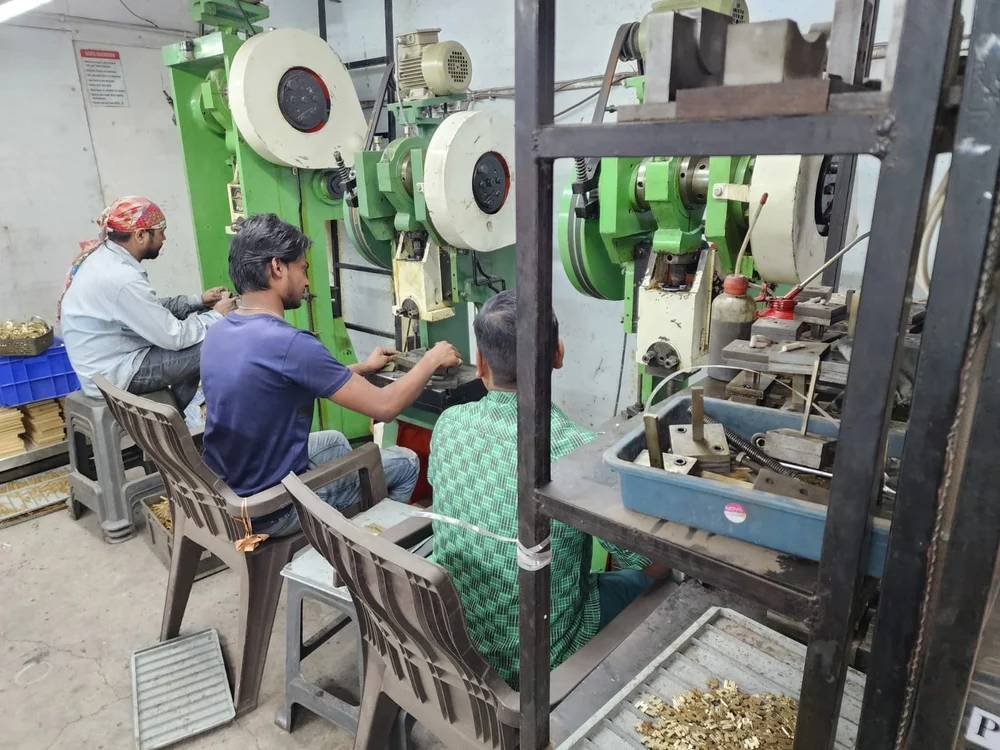

Small businesses are the backbone of Andhra Pradesh — the rice mill in a mandal town, the garment unit in a rented shed, the food-processing shed next to a mango orchard. If you run one, or want to start one, the government has two kinds of help: subsidies from the state that you do not repay, and loans from the Centre that you repay on easier terms. These MSME schemes in AP are the main routes from an idea to a running unit.
The main state framework is the AP MSME & Entrepreneur Development Policy 4.0 (2024-29). This post explains what it pays, who qualifies, central loans beside it, and the steps to apply — and clears up one confusion: the ReSTART package from 2020 is not a separate scheme you apply for today.
At a glance
| Item | Detail |
|---|---|
| Main state policy | AP MSME & Entrepreneur Development Policy 4.0 (2024-29), G.O.Ms.No.69, 26-10-2024 |
| Capital subsidy | 25% of fixed capital investment — micro up to ₹25 lakh, small up to ₹1.5 crore, medium up to ₹7 crore (+10% extra for women / SC / ST / physically handicapped) |
| Technology upgradation | 20% of fixed capital investment — micro up to ₹20 lakh, small up to ₹1 crore, medium up to ₹5 crore (expansion units only) |
| Power & SGST | ₹1 per unit power and 100% net SGST reimbursed, both for 6 years |
| Stamp duty & land conversion | 100% reimbursed |
| PMEGP loan | Up to ₹50 lakh (manufacturing) / ₹20 lakh (service), subsidy 15–35% |
| Mudra loan | Collateral-free up to ₹20 lakh (Shishu / Kishore / Tarun / Tarun Plus) |
| Where to set up | 175 MSME parks, one per Assembly constituency |
What counts as a micro, small or medium enterprise
Before the money, check which category your unit falls in. The definition comes from the Government of India’s Gazette Notification S.O. 2119 (E), dated 26 June 2020, under the MSMED Act, 2006. It uses two tests — investment and turnover — and both must fit: micro is investment up to ₹1 crore and turnover up to ₹5 crore; small is investment up to ₹10 crore and turnover up to ₹50 crore; medium is investment up to ₹50 crore and turnover up to ₹250 crore.
The category matters because every subsidy cap in these MSME schemes in AP depends on it. Once production starts, register on the Udyam portal (udyamregistration.gov.in) — that is how the government recognises your unit as an MSME.
MSME schemes in AP: Policy 4.0
The Andhra Pradesh MSME & Entrepreneur Development Policy 4.0 (2024-29) was notified by G.O.Ms.No.69 on 26 October 2024, valid for five years. Its headline benefit is the investment (capital) subsidy: 25% of your fixed capital investment, paid in annual instalments after production starts: micro units up to ₹25 lakh in 2 instalments, small units up to ₹1.5 crore in 3 instalments, and medium units up to ₹7 crore in 4 instalments.
On top of that, women, SC, ST and physically handicapped entrepreneurs domiciled in Andhra Pradesh get an additional 10% capital subsidy, with the overall cap at ₹7 crore.
The second big benefit is the technology upgradation subsidy: 20% of fixed capital investment — micro up to ₹20 lakh, small up to ₹1 crore, medium up to ₹5 crore — plus the same 10% extra for women, SC, ST and physically handicapped entrepreneurs. Note: expansion units only, not brand-new units.
Power cost reimbursement is ₹1 per unit for six years (annual cap ₹1 lakh micro, ₹5 lakh small, ₹15 lakh medium), and net SGST reimbursement is 100% for six years (annual cap 5% of turnover).
Other state incentives you should claim
The capital subsidy is the headline among the MSME schemes in AP, but the policy has smaller benefits that add up — and many units never claim them. Stamp duty and land conversion are reimbursed 100%: the full duty on land bought for industrial use, including stamp duty on leases, sheds, buildings, mortgages and hypothecations, plus the full land-conversion fee.
Skill upgradation pays ₹5,000 per person (up to 10, micro) and ₹10,000 per person (up to 20, small); medium units get 100% of the employer’s EPF contribution, capped at ₹1 lakh a year for three years. Quality certification costs are covered 100% through a state top-up. Energy and water audits are subsidised — water audit 1.75% (capped at ₹1 lakh), energy audit 75% (capped at ₹2 lakh), and 25% of the equipment the audit recommends (capped at ₹20–50 lakh).
Food businesses should also check the AP Food Processing Policy 4.0 (G.O.Ms.No.71, 26-10-2024), which pays 25–35% capital subsidy.
Where to set up: 175 MSME parks and the cluster programme
As part of the MSME schemes in AP, the state is building 175 MSME parks — one in every Assembly constituency — with plug-and-play infrastructure, on more than 3,500 acres. Ask your DIC which park in your constituency is ready and what plots are available.
Alongside the parks, the state notified the AP Cluster Development Program (AP-CDP) by G.O.Ms.No.117 on 24 May 2026, with a budget outlay of ₹200 crore: at least 45 MSME Common Facility Centres (shared testing labs and machinery) in five years, about 7,500 direct jobs, with preference to clusters in the new MSME parks.
Loans from the Centre: PMEGP and Mudra
State subsidies reduce what you spend. Central loans supply the money itself. PMEGP adds a subsidy you never repay; Mudra is a loan only. Together, these MSME schemes in AP combine state support with central loans.
PMEGP (Prime Minister’s Employment Generation Programme) has run since 2008-09. It is a Ministry of MSME scheme run by the Khadi and Village Industries Commission (KVIC) with State KVIBs and District Industries Centres. The maximum project cost is ₹50 lakh for manufacturing and ₹20 lakh for business or service, and the government pays 15% to 35% of the project cost as margin money subsidy — general category 15% (urban) / 25% (rural); special category (SC, ST, OBC, minorities, women, ex-servicemen, physically handicapped) 25% (urban) / 35% (rural). Your own contribution is 10% (general) and 5% (special category).
Our guide to PMEGP in AP explains the documents and steps. Apply on the new PMEGP 2.0 portal (pmegp.msme.gov.in). The scheme’s earlier approved cycle ended on 31 March 2026, so confirm the latest position with your bank or DIC first.
Mudra (Pradhan Mantri Mudra Yojana, PMMY) was launched on 8 April 2015. It gives collateral-free loans up to ₹20 lakh through banks, NBFCs and micro-finance institutions, in four categories: Shishu (up to ₹50,000), Kishore (above ₹50,000 up to ₹5 lakh), Tarun (above ₹5 lakh up to ₹10 lakh) and Tarun Plus (above ₹10 lakh up to ₹20 lakh, only for borrowers who have repaid a Tarun loan). Apply on the Udyamimitra or Jan Samarth portal, or at any bank branch. Our guide to the Mudra loan in AP covers the categories in detail.
Extra help for women, SC/ST and other special categories
If you are a woman, SC, ST or physically handicapped entrepreneur domiciled in Andhra Pradesh, the additional 10% capital subsidy and 10% technology upgradation subsidy apply to you under the MSME schemes in AP, with the overall cap at ₹7 crore. Also check Stand-Up India loans for SC/ST and women entrepreneurs — our guide to Stand-Up India in AP explains who can apply — and the state’s finance corporation loans, for example AP SC Corporation loans.
ReSTART: what it was, and what to apply for now
You will still see “AP MSME ReSTART” mentioned on many websites. Here is the plain position: ReSTART was a revival package launched in 2020 to help small businesses recover from the COVID-19 lockdown. It was not renewed as a separate scheme. Its support now sits inside the MSME & Entrepreneur Development Policy 4.0 (2024-29), so apply for incentives under the MSME schemes in AP. If anyone asks you for a fee for “ReSTART registration”, they are misleading you.
How to apply — what to do now
- Decide the product and check the market. Pick something with demand that local supply does not meet, or a resource-based product your area already produces.
- Write a project report. Cost of land, shed, machinery, working capital, and expected sales. Your bank and the DIC will both ask for it.
- Get clearances on the Single Desk Portal. File one common application online at apindustries.gov.in. All necessary approvals — land-use change, panchayat or municipality approval, power, factories, pollution consent, fire — are issued within 21 working days.
- Arrange finance. Approach your bank, the Andhra Pradesh State Financial Corporation (APSFC) or SIDBI for the term loan and working capital. For PMEGP or Mudra, apply online on the portals named above.
- Build, buy machinery, start production. Keep every invoice — the subsidy is paid in instalments after production starts.
- Register on Udyam at udyamregistration.gov.in once production has started, then file your incentive claim under the MSME schemes in AP with the District Industries Centre. File soon after production starts and ask the DIC for the exact filing window and checklist. Our guide to Grama and Ward Sachivalayam services explains how to get certificates and apply for government services locally.
Keep Aadhaar, PAN, the project report, land documents, bank details and your caste certificate (for special-category benefits) ready before you start.
Frequently asked questions
Can I take PMEGP and the state capital subsidy for the same unit?
Yes — PMEGP is a central loan with margin money subsidy; Policy 4.0 is a state incentive under the MSME schemes in AP. Apply through each route separately and tell both the bank and the DIC about the other.
Is a Mudra loan a subsidy?
No. Mudra is a collateral-free loan that must be repaid with interest. The subsidies are PMEGP (margin money) and the state Policy 4.0 incentives.
How long do approvals take on the Single Desk Portal?
All necessary approvals and clearances are issued within 21 working days, according to the Industries Department.
I am a woman entrepreneur. What extra do I get?
An additional 10% capital subsidy and 10% technology upgradation subsidy under Policy 4.0, with the overall cap at ₹7 crore — plus Stand-Up India loans and finance corporation loans.
For other government payments due this month, see our AP Government Schemes in November 2026 guide.
Sources
- Industries & Commerce Department, Government of Andhra Pradesh — District Industries Centre page: AP MSME & Entrepreneur Development Policy 4.0 (G.O.Ms.No.69, 26-10-2024), incentive table, Single Desk Portal, Udyam registration: https://westgodavari.ap.gov.in/industries/
- PMEGP 2.0 portal, Ministry of MSME: https://pmegp.msme.gov.in/
- Press Information Bureau, “Government Simplifies Loan Process to Ensure Timely Disbursal under PMMY” — Lok Sabha reply, 12 March 2026: https://www.pib.gov.in/PressReleasePage.aspx?PRID=2240159®=48&lang=2
- Andhra Pradesh Industrial Infrastructure Corporation (APIIC), Plug & Play Policy (4.0) — 175 MSME Parks: https://apiic.in/plug-and-play-infrastructure-policy/
- Government of Andhra Pradesh, G.O.Ms.No.117, 24.05.2026 — AP Cluster Development Program guidelines: https://apmsmeone.ap.gov.in/BhargoUploadFiles/Bhargo_MSMEONE/MSME_Downloads/GOs_&_Circulars/GO_Ms_No_117_Dt_24_05_2026_AP-CDP_Operational_Guidelines.pdf
- AP Food Processing Policy 4.0 (G.O.Ms.No.71, 26-10-2024) — see the District Industries Centre page above.

Venkatesh is the Content Lead and Researcher at UNQ Information. He researches government schemes, pension programs, citizen services, and welfare initiatives related to Andhra Pradesh and Telangana. He regularly publishes updates and educational content to help readers understand eligibility criteria, required documents, application procedures, benefit details, and important government announcements in a simple and easy-to-understand format.