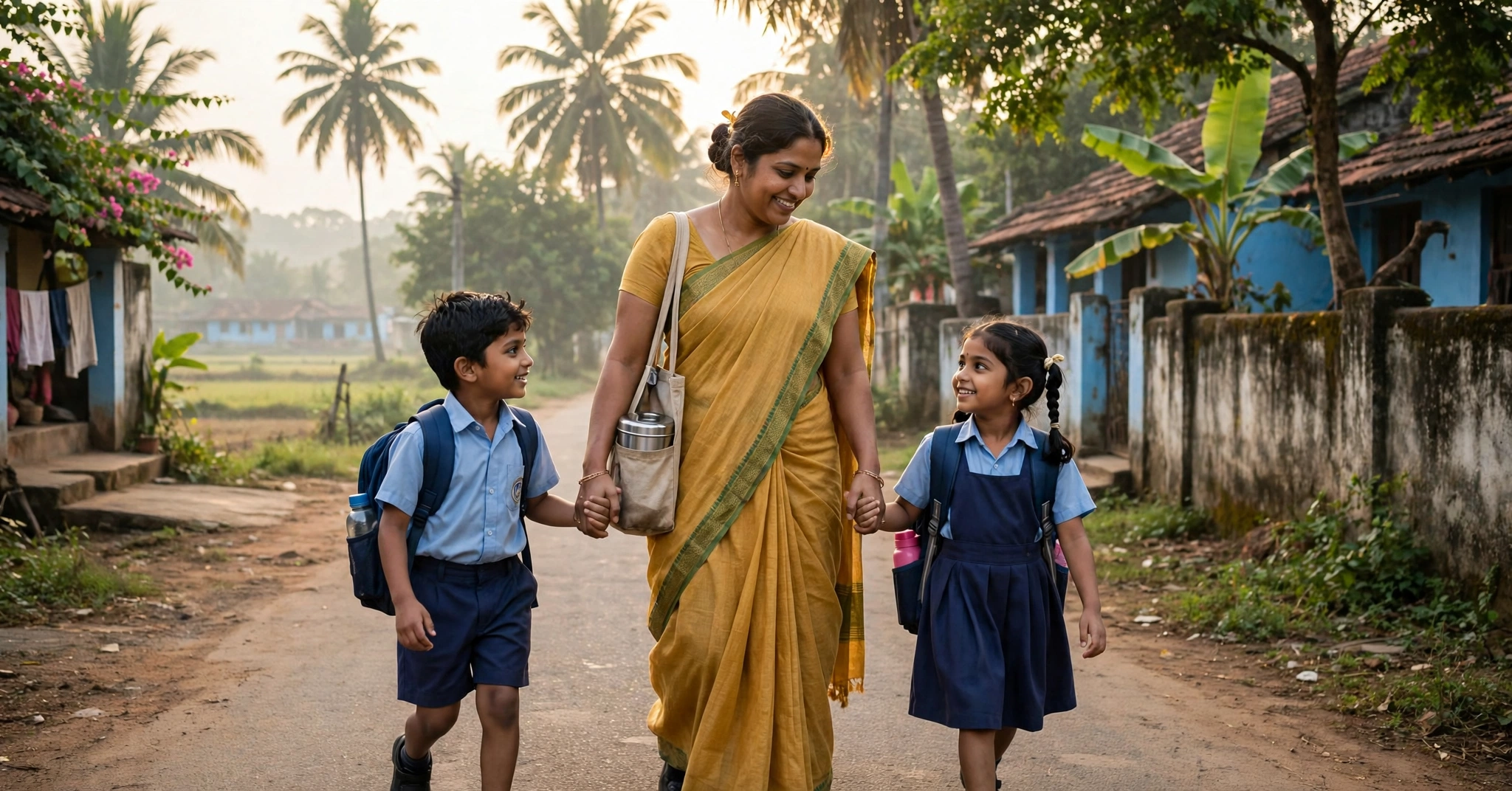

AP Amma Vodi is the scheme that gave Rs 15,000 a year to mothers in Andhra Pradesh who sent their children to school. It was launched in January 2020 and ran for four years, paying more than 40 lakh mothers every year. If you are searching for Amma Vodi today, this guide explains what the scheme was, who could get the money, why the payments stopped, and which scheme has replaced it in 2026.
Amma Vodi paid Rs 15,000 a year for every school-going child, into the mother’s bank account. The child had to attend school regularly, with at least 75% attendance. The scheme was replaced by Talliki Vandanam, which pays the same Rs 15,000 per child per year. If you are a mother of a school-going child, Talliki Vandanam is the scheme you should look for now, not Amma Vodi.
| Scheme | Amma Vodi (now replaced by Talliki Vandanam) |
| Amount | Rs 15,000 a year per child |
| Who it was for | Mothers of children in classes 1 to 12 |
| Launched | January 2020 |
| Attendance | At least 75% |
| Payment | Into the mother’s bank account |
| Status in 2026 | Closed; replaced by Talliki Vandanam |

What Was AP Amma Vodi?
AP Amma Vodi was a scheme to pay mothers for sending their children to school. The idea was simple: many poor families take their children out of school to work, because the family needs the money. If the mother gets Rs 15,000 a year for every child who goes to school, the family can afford to keep the child in school. The money was paid to the mother, not the father, because the government believed the mother would spend it on the child’s education.
The scheme covered children studying in classes 1 to 12, in government schools and in private schools. It was not limited to one child per family. A mother with two children in school got Rs 15,000 for each child. The amount was paid once a year, in January, directly into the mother’s bank account. Of the Rs 15,000, Rs 1,000 was deducted for the school’s toilet maintenance fund, so the mother received Rs 14,000 and the school received Rs 1,000.
Amma Vodi was one of the biggest schemes of the YSRCP government. In the first year, more than 40 lakh mothers received the money, and the government spent thousands of crores on the scheme every year. The scheme ran for four years, from January 2020 to January 2024.
Who Was Eligible for AP Amma Vodi?
These conditions applied for AP Amma Vodi:
- The mother or guardian of a child studying in classes 1 to 12 in a recognised school in Andhra Pradesh.
- The child must have at least 75% attendance in the school year.
- The family must hold a white ration card, that is, it must be a below-poverty-line family.
- The mother must have a bank account in her own name, linked to Aadhaar, so that the money can be paid by Direct Benefit Transfer.
- The child must be studying in a school in Andhra Pradesh, government or private.
Children who had dropped out of school were not eligible. Children studying outside Andhra Pradesh were not eligible. The school verified the attendance and the enrolment of each child, and the list of eligible mothers was prepared from the school data and the secretariat database. If the child’s attendance fell below 75%, the mother did not get the money for that year. For the midday meal that school children also receive, see our guide to the Dokka Seethamma Midday Meal.
How Much Did AP Amma Vodi Pay?
AP Amma Vodi paid Rs 15,000 a year for every school-going child. The mother received Rs 14,000 in her bank account, and Rs 1,000 was kept for the toilet maintenance fund of the child’s school. A mother with one child in school got Rs 14,000 a year. A mother with two children in school got Rs 28,000 a year. A mother with three children got Rs 42,000 a year.
The amount was paid once a year, in January, at a public function. The payment was made by Direct Benefit Transfer, and the mother received a message on her mobile number when the money was credited. The amount did not change with the class of the child. A child in class 1 and a child in class 12 both got the same Rs 15,000.
Documents Required for AP Amma Vodi
These documents were needed for AP Amma Vodi:
- Aadhaar card of the mother.
- Aadhaar card of the child.
- White ration card of the family.
- Bank account passbook in the mother’s name.
- School certificate or bonafide certificate of the child, showing the class and the attendance.
- Mobile number linked to Aadhaar, for payment messages.
All the certificates could be applied for on the MeeSeva portal at meeseva.ap.gov.in. Keep the originals for verification and give photocopies to the school or the secretariat. Do not give your original certificates or your bank passbook to any agent.
What Happened to AP Amma Vodi?
AP Amma Vodi ran from January 2020 to January 2024, with four yearly payments. The government changed in June 2024, and the new government stopped Amma Vodi. The last Amma Vodi payment was made in January 2024, for the 2023-24 academic year. No Amma Vodi payment has been made since then, and no new Amma Vodi applications are being taken.
The new government replaced Amma Vodi with Talliki Vandanam. The two schemes are similar, but there are important differences:
- Talliki Vandanam pays Rs 15,000 per child per year, the same amount as Amma Vodi.
- Talliki Vandanam pays the full Rs 15,000 to the mother, with no Rs 1,000 deduction for the school.
- Talliki Vandanam is paid in a single payment, usually in June, at the start of the academic year.
- Talliki Vandanam also requires 75% attendance, like Amma Vodi.
For the full details of the current scheme, read our guide to Talliki Vandanam, which explains the payment status, the eligibility and how to check whether your name is on the list. Mothers who were getting Amma Vodi do not need to apply again for Talliki Vandanam from scratch in most cases, because the list is prepared from the school data, but they should check with the school whether their child’s name is on the Talliki Vandanam list.
Other Help for School Children in AP
Amma Vodi and Talliki Vandanam are not the only help for school children in Andhra Pradesh. These schemes are also available:
- Pre-Matric Scholarship in AP for SC, ST, BC and minority students in classes 5 to 10, applied for through the school on the Jnanabhumi portal.
- Dokka Seethamma Midday Meal, the free lunch given to children in government schools.
- Free Intermediate Education in AP, which covers the tuition fee of Intermediate students in government junior colleges.
- Anganwadi in AP, which gives free nutrition, pre-school education and health check-ups to children below 6 years and to pregnant and lactating mothers.
If you have a question about any of these schemes, visit the nearest Village or Ward Secretariat. The Andhra Pradesh government’s portal is ap.gov.in, and scheme announcements are made there first.
Frequently Asked Questions About AP Amma Vodi
How much did AP Amma Vodi pay?
Rs 15,000 a year per child. The mother received Rs 14,000 in her bank account, and Rs 1,000 went to the school’s toilet maintenance fund.
Is AP Amma Vodi still running in 2026?
No. Amma Vodi ran from January 2020 to January 2024, and the last payment was made in January 2024. It has been replaced by Talliki Vandanam, which pays Rs 15,000 per child per year.
What is the difference between Amma Vodi and Talliki Vandanam?
Both pay Rs 15,000 per child per year to the mother, for children in classes 1 to 12 with 75% attendance. Amma Vodi deducted Rs 1,000 for the school, so the mother got Rs 14,000. Talliki Vandanam pays the full Rs 15,000 to the mother, with no deduction.
Do I need to apply again for Talliki Vandanam if I got Amma Vodi?
In most cases, no. The list is prepared from the school data. Check with your child’s school whether the child’s name is on the Talliki Vandanam list, and make sure the attendance is above 75%.
What was the attendance rule for AP Amma Vodi?
The child must have at least 75% attendance in the school year. Children with less attendance did not get the money for that year.
Final Word
AP Amma Vodi gave Rs 15,000 a year per child to more than 40 lakh mothers in Andhra Pradesh, from January 2020 to January 2024. It stopped when the government changed, and Talliki Vandanam has taken its place, paying the same Rs 15,000 per child per year with no deduction. If you are a mother of a school-going child, check the Talliki Vandanam list at your child’s school, and keep the child’s attendance above 75%. For other scheme updates and payment news, see our roundup of Andhra Pradesh schemes in August 2026.
Last updated: November 2026